Last updated: April 29, 2026 · 15 min read
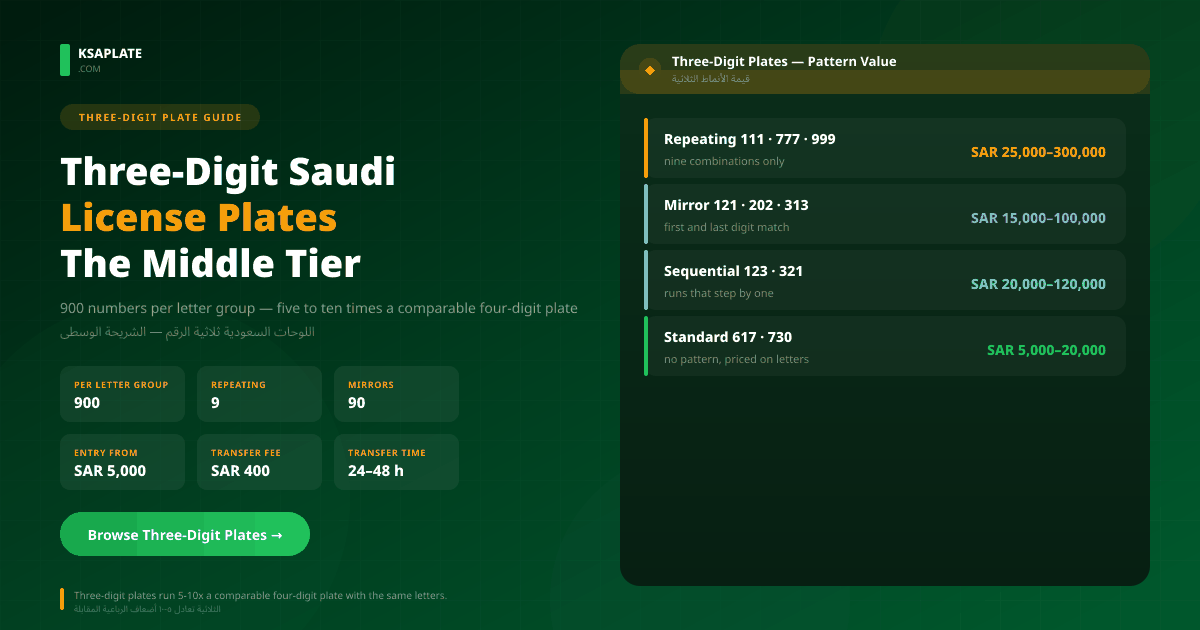
- Three-digit Saudi license plates (numbers 100–999) are 10× rarer than standard four-digit plates — only 900 combinations exist per letter group.
- The most valuable combinations are triple-repeat numbers (111, 222, 777, 999) and century numbers (100, 200, 500, 900) — commanding SAR 30,000–150,000+ depending on letters.
- Entry-level three-digit plates start at SAR 5,000, making this the most accessible gateway into Saudi Arabia’s VIP plate market.
- 90 palindromes exist in the 100–999 range (101, 121, 191, 212…) — a structurally undervalued subcategory with strong appreciation potential.
- The number 786 carries deep Islamic numerological significance and commands a standalone premium across the entire GCC market.
- Browse all active listings at KSAplate.com → Three-Digit Plates — no account required to search.
A three-digit Saudi license plate is any private registration plate where the numeric portion falls between 100 and 999. With exactly 900 possible numeric combinations per letter group — versus 9,000 for standard four-digit plates — a three-digit plate is ten times rarer than the plate on most Saudi vehicles. At entry prices starting around SAR 5,000, the three-digit tier is the most affordable VIP plate segment in the Kingdom, making it the natural first step for buyers who want genuine scarcity without the six-figure commitment that single- or two-digit plates demand.
What Is a Three-Digit Saudi License Plate?
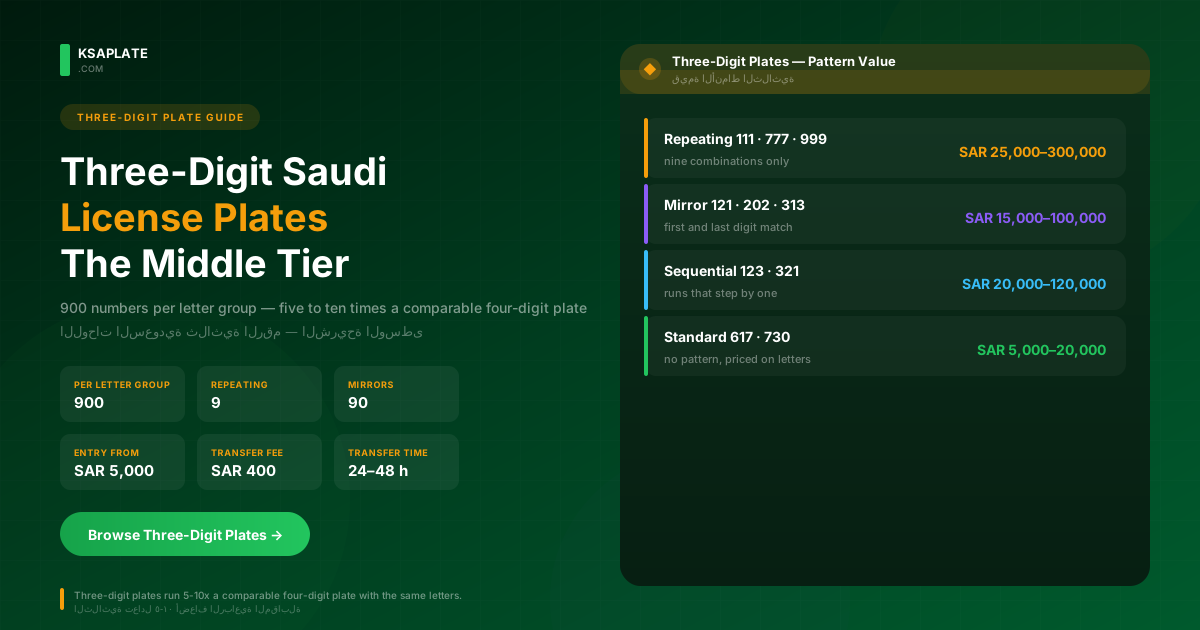
A three-digit Saudi license plate is a private vehicle registration plate where the plate number — the numeric field on the right side of the plate — is a value from 100 to 999. Saudi private plates follow the format of up to three Arabic letters paired with one to four digits. Three-digit plates represent the middle tier of this rarity spectrum: rarer than the standard four-digit plates most Saudis drive, yet more plentiful and more accessible than two-digit or single-digit plates.
Three-digit plates are issued under the same framework as all private plates administered by the Saudi General Directorate of Traffic. They are fully transferable via the Absher platform, carry legal registration status when attached to a vehicle, and trade freely in the private market. The term "three-digit plate" refers strictly to the digit count of the number field — a plate showing "105" is three-digit; a plate showing "1050" is four-digit. For a full explanation of how Saudi plate categories work by color and type, see the Saudi plate types and colors guide.
How the Number Field Is Counted
Saudi plates do not zero-pad the number field for display purposes in the way some international plates do. A plate registered as "200" displays as 200 — three digits. A plate registered as "50" displays as 50 — two digits. This display-matches-value rule means digit classification is unambiguous: count the actual digits shown, and you know the tier. Three-digit plates display numbers from 100 to 999 with no leading zeros, and they are counted and valued as three-digit plates by every market participant and by the General Directorate of Traffic’s plate-auction system.
Who Buys Three-Digit Plates?
Three-digit plates attract three distinct buyer types. First, status-conscious first-time premium buyers who want to step out of the standard four-digit market without committing to two-digit prices. Second, investors who recognize that the 10× scarcity premium over four-digit plates is structurally underpriced relative to two-digit plates (which command 100× scarcity at 10×–20× the cost). Third, collectors who target specific meaningful combinations — triple-repeats, palindromes, religious numbers like 786 — for their cultural and symbolic weight.
Three-digit plates are the sweet spot of the Saudi plate market: scarce enough to hold and grow in value, accessible enough to buy and sell without needing royal-family wealth. That balance is why they represent the highest liquidity segment outside the standard market.
How Rare Are Three-Digit Plates? The Math
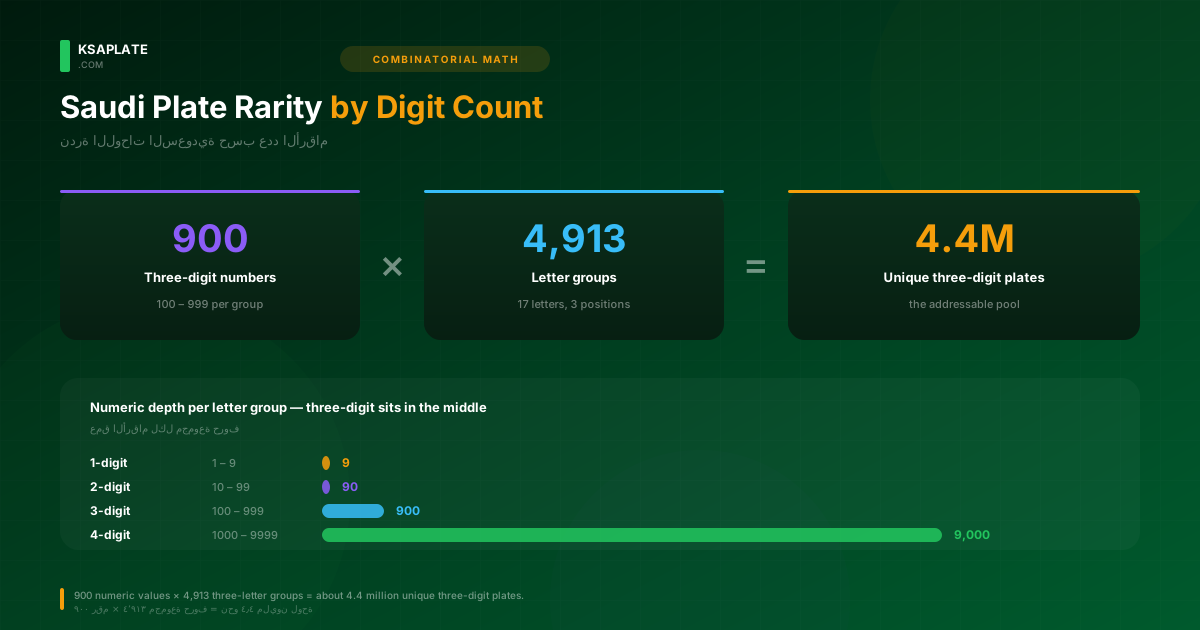
Rarity in the Saudi plate market is determined by the total number of possible combinations in each digit category. The calculation follows a clean logarithmic pattern that makes three-digit plate scarcity straightforward to understand:
- 4-digit plates: numbers 1,000–9,999 = 9,000 combinations per letter group
- 3-digit plates: numbers 100–999 = 900 combinations per letter group
- 2-digit plates: numbers 10–99 = 90 combinations per letter group
- 1-digit plates: numbers 1–9 = 9 combinations per letter group
Three-digit plates are exactly 10% of the four-digit supply — making them ten times rarer than the plates most Saudis drive. Against the total plate universe for a given letter group (9,909 plates from 1 to 9,999), three-digit plates represent just 9.08% of all combinations. This is arithmetic, not marketing language.
Why Letter Groups Matter for Rarity
Saudi plates pair a number with a letter group (one, two, or three Arabic letters). The 17 letters used in Saudi plates — per the Saudi plate standard documented by the General Directorate of Traffic — create multiple independent series. Each letter group has its own set of 900 three-digit plates. This means the number "777" exists with potentially dozens of different letter combinations — each combination is a distinct, independently valued plate. The digit number determines digit-tier rarity; the letter combination is a separate multiplier layered on top.
| Digit Count | Number Range | Combos per Letter Group | Rarity vs. 4-Digit | 2026 Private Market Range (SAR) |
|---|---|---|---|---|
| 1 digit | 1–9 | 9 | 1,000× rarer | 200,000 – 21,000,000+ |
| 2 digits | 10–99 | 90 | 100× rarer | 18,000 – 210,000 |
| 3 digits | 100–999 | 900 | 10× rarer | 5,000 – 150,000+ |
| 4 digits (standard) | 1,000–9,999 | 9,000 | Baseline | 1,000 – 20,000 |
Three-Digit vs. Two-Digit vs. Four-Digit: Which Tier Is Right for You?
Choosing your digit tier is the most important decision a premium plate buyer makes. The right tier depends on your budget, holding horizon, and primary goal — status display versus investment return versus cultural meaning.
| Factor | 4-Digit (Standard) | 3-Digit (This Guide) | 2-Digit | 1-Digit |
|---|---|---|---|---|
| Entry price | SAR 1,000 | SAR 5,000 | SAR 18,000 | SAR 200,000+ |
| Scarcity | Standard supply | 10× rarer | 100× rarer | 1,000× rarer |
| Liquidity | Very high | High | Moderate–High | Low |
| Status signal | None | Visible prestige | Strong | Maximum |
| Investment thesis | No scarcity premium | Underpriced entry ramp | Active trading | Store of value |
| Best for | Practical registration | First-time VIP buyers, investors | Value traders | Ultra-HNW, collectors |
The three-digit tier’s key advantage is its price-to-scarcity ratio. A three-digit plate is 10× scarcer than a four-digit plate, but often priced at only 3×–8× the cost of a comparable four-digit plate with the same letter group. That gap — real scarcity at a discount to its mathematical fair value — is the structural thesis for three-digit plate investment in 2026. For a deeper analysis of plate investment mechanics, the Saudi license plate investment guide covers ROI methodology and appreciation data.
If your budget is SAR 10,000–50,000, the three-digit market gives you 10× the scarcity of a standard plate at a fraction of two-digit cost. That asymmetry is the core case for entering at the three-digit tier.
What's your plate worth?
Get an instant, free estimate with our plate value calculator.
Calculate My Plate's ValueMost Valuable Three-Digit Combinations (Ranked)
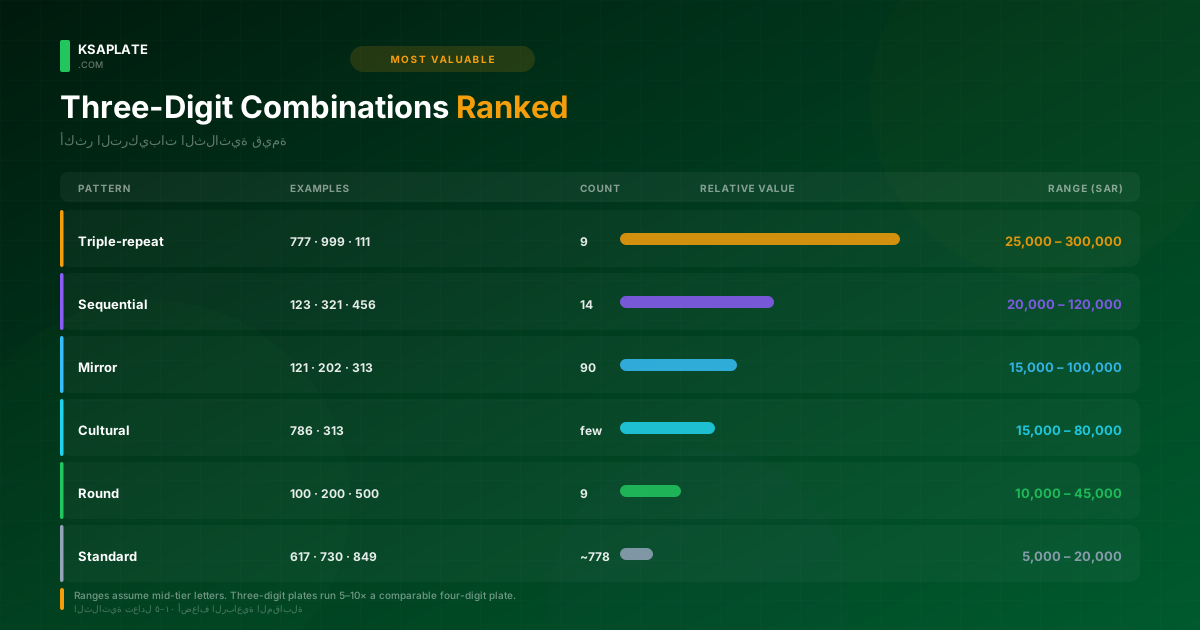
Within the 900 available three-digit combinations, value is not evenly distributed. Five distinct tiers exist, driven by pattern recognition, cultural significance, mathematical elegance, and supply constraints within each pattern category.
Tier 1: Triple-Repeat Numbers (9 Combinations)
Triple-repeat numbers — 111, 222, 333, 444, 555, 666, 777, 888, 999 — are the undisputed crown of the three-digit market. In a three-digit plate, the triple pattern mirrors the logic of repeating quads (1111, 7777) in the four-digit market: visual symmetry, easy recall, and cultural weight converge to generate the highest demand. Only 9 such combinations exist per letter group, making them 100× rarer than the already-scarce three-digit baseline.
- 777 — The strongest cultural premium. The number 7 holds deep Islamic significance: seven heavens, seven tawaf circuits around the Ka’bah, seven days of creation. Triple-7 plates attract buyers across the entire GCC market and regularly appear in Absher auction results. Estimated private market range: SAR 80,000–150,000 for standard three-letter groups.
- 999 — The 99 Names of Allah (Asmaa ul Husna) lend 9 intense religious resonance in Islamic culture. The triple-9 variant amplifies this premium. Market range: SAR 70,000–130,000.
- 111 — The "all ones" plate carries leadership connotations similar to the single-digit "1" — the most prestigious number in the entire Saudi plate market. Triple-1 is the closest equivalent in the three-digit tier. SAR 75,000–140,000.
- 888 — Prosperity associations from Arabic and pan-Asian cultural overlap make 888 a crossover premium across multiple buyer communities. SAR 50,000–100,000.
- 333, 444, 555, 666, 222 — Follow the same triple-pattern premium with progressively lower cultural multipliers. Expect SAR 30,000–70,000 depending on letter group.
For the cultural context behind why 7, 9, and 1 dominate Saudi plate valuations, the lucky numbers for Saudi license plates guide covers Islamic numerology in depth.
Tier 2: Century Numbers (9 Combinations)
Century numbers — 100, 200, 300, 400, 500, 600, 700, 800, 900 — carry a strong round-number prestige that is well-documented in behavioral economics: humans across cultures assign premium value to round numbers as status markers. In the Saudi plate market, century numbers represent the lowest-cost entry into truly prestigious three-digit territory. Only 9 exist per letter group, placing them in the same 100× rarity tier as triple-repeat numbers. Estimated market range: SAR 30,000–80,000, with 100 and 900 commanding the highest premium due to boundary positioning.
Tier 3: Palindrome Numbers (90 Combinations)
Palindromes — numbers that read the same forwards and backwards — form a structurally undervalued subcategory of the three-digit market. In the 100–999 range, a palindrome exists whenever the first digit equals the last: 101, 111, 121, 131, 141, 151, 161, 171, 181, 191, 202, 212 … 989, 999. That gives exactly 90 palindromes (9 choices for the first/last digit × 10 choices for the middle digit). The 9 triple-repeat numbers (111, 222…) are a subset of palindromes. For the remaining 81 non-triple palindromes, prices are substantially lower than triple-repeats while sharing the same mirror symmetry that collectors prize. Market range: SAR 15,000–60,000. Full analysis in the palindromes section below.
Tier 4: Sequential Numbers (12 Combinations)
Sequential numbers ascending (123, 234, 345, 456, 567, 678, 789) and descending (321, 432, 543, 654, 765, 876, 987) carry a mathematical elegance premium. Buyers prize them for their visual flow and easy recall. The most desirable are 123 (the universal "beginner" sequence) and 321 (countdown symmetry). Market range: SAR 15,000–45,000.
Tier 5: All Other Three-Digit Numbers (796 Combinations)
The remaining 796 combinations carry no pattern premium but still command a 10× rarity advantage over four-digit plates. Market range: SAR 5,000–15,000 for standard letter groups, rising to SAR 20,000–40,000 when combined with desirable letter patterns.
Why 786 Is the Most Sought-After Three-Digit Number
The number 786 occupies a unique position in the three-digit plate market. In Islamic numerology — specifically the Abjad numerical system — 786 is the numerical equivalent of the Arabic phrase "Bismillah ir-Rahman ir-Rahim" (In the name of God, the Most Gracious, the Most Merciful), the opening phrase of the Quran. This association makes 786 deeply significant to Muslim buyers across Saudi Arabia, Pakistan, Bangladesh, and the wider Islamic world.
On KSAplate.com, 786 plates consistently rank among the most-viewed three-digit listings regardless of the accompanying letter group. At auction, 786 routinely bids above its statistical rarity tier — buyers competing for it treat it as a Tier 1 combination despite its non-palindrome, non-sequential, non-century character. Private market range for 786: SAR 40,000–120,000 depending on letter combination, with triple-same-letter versions commanding the highest premiums.
786 is the only three-digit plate number that transcends all tier categories. Its cultural premium is buyer-demand-driven, not mathematically derived — which makes it both uniquely valuable and harder to predict for pure investors.
For broader context on numbers with religious significance in the Saudi plate market, see the lucky numbers guide covering 786, 777, and 313.
Palindrome Plates: The Hidden Opportunity in the 100–999 Range
Palindrome plates are the most systematically undervalued subcategory in the three-digit market. A palindrome number reads the same forwards and backwards — in the 100–999 range, this means the first and last digit are identical. The full set is: 101, 111, 121, 131, 141, 151, 161, 171, 181, 191, 202, 212, 222 … all the way to 919, 929, 939, 949, 959, 969, 979, 989, 999. Exactly 90 palindromes exist per letter group.
Why are palindromes undervalued? Because buyers focus on the most obvious premium markers (triple-repeats, centuries) and overlook the structural scarcity of the palindrome set. The 81 non-triple palindromes (all palindromes except 111, 222, 333, 444, 555, 666, 777, 888, 999) trade at Tier 3 prices — roughly SAR 15,000–60,000 — yet they share mirror symmetry with triple-repeats and are only 9× more plentiful. That valuation gap is an opportunity.
Most Attractive Palindromes (Non-Triple)
- 191 — The "bookend 1" premium. Ones are prestigious; having two of them flanking a 9 creates dual resonance. Strong demand.
- 171 — 17 is a significant number in Islamic tradition (17 rak’ahs in the five daily prayers). The palindrome format adds symmetry premium.
- 131 — Clean, low-number palindrome. Easy to recall. Growing demand among collectors.
- 909 — Century-adjacent (close to 900) plus palindrome symmetry. Double premium driver.
- 808 — Similar to 808 in global music culture (Roland TR-808 drum machine) — appeals to younger Saudi buyers with international cultural awareness.
Current Market Prices in 2026
Private-market prices for three-digit Saudi license plates — based on KSAplate.com active listings and Absher auction results as of April 2026 — distribute across four clear pricing bands.
Entry Band: SAR 5,000 – SAR 15,000
Random three-digit numbers (Tier 5) with standard letter groups occupy this band. These plates have no special pattern or cultural premium — they’re priced on digit rarity alone. At SAR 5,000, a buyer gets 10× the scarcity of a SAR 2,000–5,000 four-digit plate. For first-time premium plate buyers, this band is the ideal entry point to test the market before committing larger capital.
Mid-Market: SAR 15,000 – SAR 50,000
Sequential numbers, palindromes, and Tier 3–4 combinations with standard letter groups occupy the mid-market. The number 786 with average letter groups sits in the upper half of this band. This is the most active trading segment for three-digit plates — similar to how the SAR 40,000–100,000 range is the engine room of the two-digit market. Expect 4–10 week deal cycles at this price level based on observed market activity on KSAplate.com.
Premium Band: SAR 50,000 – SAR 100,000
Century numbers, 786, and triple-repeat numbers with standard letter groups sit in this band. At the high end of this range, buyers are competing with investors who track Absher auction data and understand the 100-combination supply ceiling on triple-repeats per letter group.
Ultra-Premium: SAR 100,000+
Triple-repeat numbers with premium letter combinations — particularly triple-same-letter groups such as ب ب ب, ص ص ص, ح ح ح — breach SAR 100,000. The theoretical ceiling for a three-digit plate combining 777 with a triple-same prestigious letter group could reach SAR 200,000–300,000 based on the multiplier effects documented in Absher auction results. These are illiquid assets at this price level — hold periods of 6–24 months should be expected.
| Combination Type | Example | Combinations per Group | 2026 SAR Range | Liquidity |
|---|---|---|---|---|
| Triple-repeat + triple-same letter | ب ب ب 777 | 9 numbers × few letter groups | 100,000 – 300,000+ | Low |
| Triple-repeat (standard letters) | س أ ن 777 | 9 per group | 80,000 – 150,000 | Moderate |
| 786 + premium letters | ك م س 786 | 1 per group | 60,000 – 120,000 | Moderate |
| Century + premium letters | ب ر أ 100 | 9 per group | 40,000 – 80,000 | Moderate |
| Palindrome (non-triple) | م ر ق 191 | 81 non-triple per group | 15,000 – 60,000 | High |
| Sequential | ح س ن 123 | 12 per group | 15,000 – 45,000 | High |
| Random (Tier 5) | ر ب ط 547 | 796 per group | 5,000 – 15,000 | Very High |
Absher Auction Starting Prices
When three-digit plates are released through Absher’s electronic plate auction system, starting bids typically range from SAR 3,000 to SAR 8,000 for Tier 5 combinations, SAR 10,000–30,000 for palindromes and century numbers, and SAR 25,000–60,000 for triple-repeat numbers. As reported by Arab News coverage of Saudi plate auctions, competitive auctions regularly generate final prices 50%–200% above opening bids for high-demand combinations. The full Absher bidding process is covered step-by-step in the Absher plate auction guide.
The Triple-Letter Multiplier Effect
The letter combination on a Saudi plate is an independent value multiplier that stacks on top of digit rarity. In the three-digit market, as in the two-digit market, a plate’s total value equals its digit tier value multiplied by its letter tier value — and the letter multiplier can be as powerful as the digit premium itself.
Triple-Same-Letter Plates
When all three Arabic letters on the plate are identical — ب ب ب, ص ص ص, ح ح ح, ك ك ك — the visual symmetry and extreme rarity of the letter combination adds a 3×–8× multiplier to the digit-tier baseline. Applied to the three-digit market, this means a random Tier 5 plate priced at SAR 8,000 becomes SAR 24,000–64,000 if the letter group is triple-same. A triple-repeat number (Tier 1) at SAR 90,000 with a triple-same letter group can reach SAR 270,000–720,000 in theory, though real-world liquidity constrains the upper bound.
Two-Letter Plates
Older Saudi plates with only two Arabic letters instead of the standard three exist from earlier registration periods. When paired with a three-digit number, these create a double rarity — rare letter count and rare digit count simultaneously. Two-letter plates in the three-digit tier are among the rarest combinations in the entire Saudi plate market.
Culturally Resonant Letter Combinations
Certain letter combinations approximate Arabic words, honorifics, or sacred associations. These carry a soft premium that is harder to quantify but consistently reflected in auction bid patterns. Letter combinations that phonetically suggest royal, religious, or prestigious terms attract additional bidder interest. The complete Arabic letters guide documents all 17 letters used in Saudi plates and their cultural weight.
Where Three-Digit Plates Trade in Saudi Arabia
Three-digit plates trade across four primary channels in Saudi Arabia’s premium plate market:
- KSAplate.com — The dedicated Saudi plate marketplace with the largest active three-digit inventory. Filter by digit count, number range, letter group, and price. No account required to browse; list for free with no commission.
- Absher Electronic Plate Auctions — The official government channel run by the Ministry of Interior. Auctions are announced 1–2 weeks in advance via Absher under Vehicles → Plate Auctions. Starting bids are set by the government; final prices are market-determined. Verified ownership at every step.
- Haraj.com.sa — Saudi Arabia’s largest general classifieds platform. Three-digit plates appear here but with less filtering capability and more verification burden on the buyer.
- Word-of-mouth networks — WhatsApp groups, tribal networks, and Snapchat communities where serious collectors and brokers transact privately. High trust, low transparency. Recommended only for experienced buyers with strong verification discipline.
For buyers new to the premium plate market, KSAplate.com + Absher is the safest combination: private market liquidity from KSAplate.com, government-verified transfers from Absher. Use both to triangulate fair value before committing.
How to Buy a Three-Digit Plate: Step-by-Step
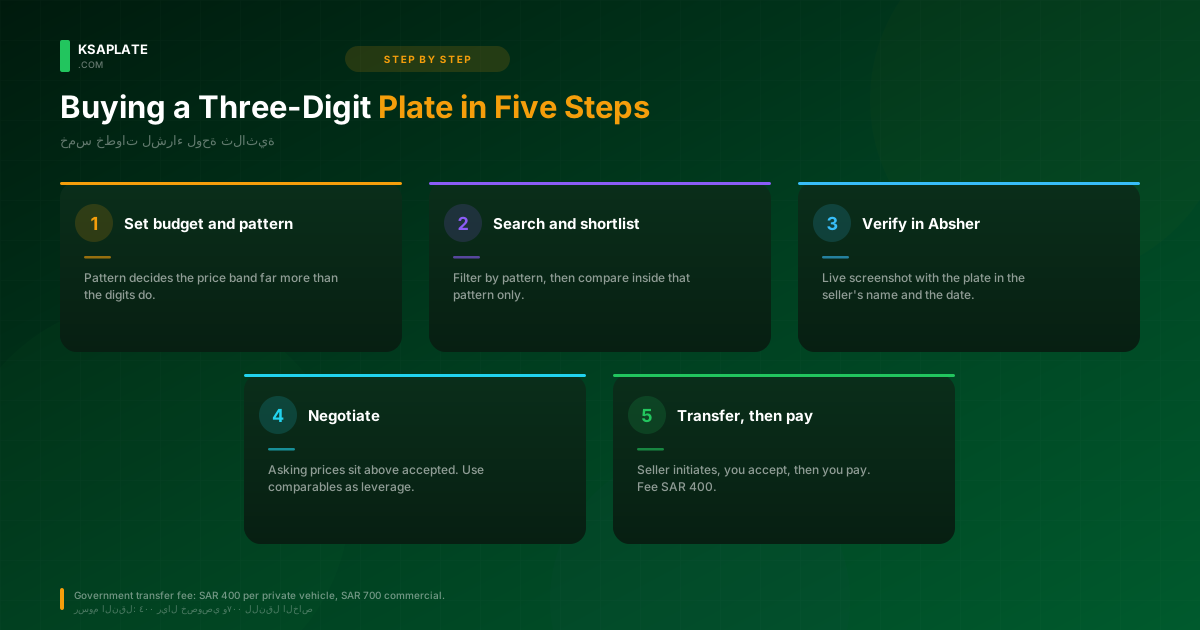
- Set your budget and tier. Decide whether you’re targeting Tier 5 entry (SAR 5K–15K), mid-market palindromes/sequentials (SAR 15K–50K), or premium triple-repeats/centuries (SAR 50K–150K). Factor in the SAR 1,030 plate-transfer fee — SAR 400 in traffic-department fees for each of the two vehicles involved plus a SAR 230 Absher service fee — and any broker commission if using an intermediary.
- Search active listings. Start at KSAplate.com three-digit filter. Cross-reference with Absher’s upcoming auction calendar for government-released plates in your target combination. Shortlist 3–5 plates before engaging any seller.
- Verify ownership via Absher. Ask the seller to share their Absher plate registration screenshot showing the plate number, letter group, and current owner status. A legitimate seller will do this without hesitation. Never proceed without this step — fraud in the private plate market almost always involves unverified ownership claims.
- Agree price and document the sale. Negotiate — 10%–20% room is typical in the three-digit market. Use a written sale agreement documenting plate number, letter group, agreed price, payment method, and transfer timeline. For transactions above SAR 20,000, use bank transfer only. The plate buying safety guide covers how to avoid scams in detail.
- Complete transfer via Absher. Both buyer and seller log into Absher independently. Seller initiates transfer under Vehicles → Plates → Transfer; buyer confirms. Neither Absher nor the traffic department publishes a processing time for this, so treat any figure you see quoted as a guess. Full transfer instructions are in the Absher plate transfer guide.
How to Sell Your Three-Digit Plate
Selling a three-digit plate effectively requires understanding your plate’s tier, setting the right asking price, and reaching the right buyers. Three practical steps maximize your outcome:
Price It Right from Day One
Overpricing a three-digit plate in the mid-market (SAR 15K–50K) typically stalls the listing for 60–90 days. Use the comparison table in this guide as your baseline, then check the last three sold prices for comparable combinations on KSAplate.com. Price at market or slightly below to generate early momentum — the first week of a listing generates 60%–70% of total views.
List for free on KSAplate.com
List your plate at KSAplate.com → List My Plate with no fees and no commission. Include: the exact plate number and letter group (Arabic letters), your asking price in SAR, and a clear Absher screenshot confirming your ownership. Buyers who contact you are pre-qualified and serious.
Time Your Sale
Premium plate activity peaks in Saudi Arabia around Eid Al-Fitr, Eid Al-Adha, and National Day (September 23) — when gifting and celebrations drive discretionary spending. Listing 3–4 weeks before these dates captures buyers in acquisition mode. The market timing guide covers seasonal patterns in depth.
Due Diligence Before You Pay
Three-digit plates transact at price points where due diligence is essential. Four checks protect every buyer:
- Absher ownership confirmation — As described in Step 3 above. Non-negotiable.
- No vehicle attached — A plate attached to a vehicle cannot be transferred separately until it is unregistered from that vehicle. Confirm the plate is "unattached" status in Absher.
- No outstanding traffic fines on the plate — Plates with unsettled fines may face transfer holds. Ask the seller to clear fines via Absher before transfer.
- Market price cross-check — If an asking price seems significantly below market for the combination, investigate before proceeding. Distressed pricing can signal ownership disputes or other complications.
Frequently Asked Questions
What is a three-digit Saudi license plate?
A three-digit Saudi license plate is a private vehicle registration plate where the numeric portion of the plate is a number between 100 and 999. Saudi plates use a format of up to three Arabic letters paired with one to four digits. Three-digit plates are 10 times rarer than standard four-digit plates, with only 900 possible numeric combinations per letter group. They represent the most accessible tier of Saudi Arabia’s VIP plate market.
How much does a three-digit Saudi plate cost in 2026?
Three-digit Saudi license plates range from SAR 5,000 for entry-level random combinations to SAR 150,000 or more for triple-repeat numbers (111, 777, 999) with premium letter groups. The mid-market band of SAR 15,000–50,000 covers palindromes, sequential numbers, and the culturally significant 786. Triple-same-letter combinations multiply any of these prices by 3×–8×. Browse current prices at KSAplate.com for live listings.
Which three-digit Saudi plate number is most valuable?
Triple-repeat numbers — 111, 222, 333, 444, 555, 666, 777, 888, 999 — are consistently the most valuable three-digit combinations. Of these, 777 and 999 command the highest premiums due to their Islamic cultural resonance: 7 represents the seven heavens and seven tawaf circuits, while 9 is associated with the 99 Names of Allah. The number 786 (the numerical value of "Bismillah") is the most sought-after non-triple number in the three-digit range.
How many three-digit Saudi license plates exist?
There are 900 possible three-digit combinations (numbers 100–999) per letter group on Saudi private plates. Since Saudi plates can carry up to three Arabic letters from a set of 17, the total supply of three-digit plates across all letter combinations is substantially larger — but each specific plate (a unique number + letter combination) is unique and indivisible. Only one plate can carry "777 ب ب ب" in the Saudi registration system at any time.
What are palindrome plates in Saudi Arabia?
A palindrome plate is one where the plate number reads the same forwards and backwards. In the three-digit range (100–999), 90 palindromes exist: every number where the first digit equals the last (101, 121, 131, 191, 202, 212, 222, etc.). Palindrome plates are structurally undervalued relative to triple-repeats — they share mirror symmetry and a sub-90-combination supply ceiling, yet trade at 30%–60% of triple-repeat prices for equivalent letter groups.
Can I transfer a three-digit plate via Absher?
Yes. All Saudi private plate transfers — including three-digit plates — are completed through the Absher platform under Vehicles → Plates → Transfer Plate. Both buyer and seller must have active Absher accounts (Saudi nationals) or authorized Iqama accounts (eligible expats). The transfer costs SAR 1,030 in government fees — SAR 400 for each of the two vehicles involved plus SAR 230 for the Absher service. No processing time is published. Full instructions are in the Absher transfer guide.
Are three-digit plates a good investment?
Three-digit plates show structural appreciation potential for two reasons: (1) supply is permanently capped at 900 combinations per letter group — no new three-digit plates can ever be created; (2) Saudi Arabia’s premium plate market has shown consistent demand growth driven by Vision 2030 wealth distribution and a growing collector community. That said, liquidity varies by combination — triple-repeats and 786 are easiest to resell, while random Tier 5 plates may take longer. The investment guide covers ROI data in detail.
Where can I buy a three-digit Saudi license plate?
The two best channels are KSAplate.com (Saudi Arabia’s dedicated private plate marketplace, free to browse and list) and the Absher electronic plate auction platform (government-run, verified ownership). KSAplate.com offers the widest selection of private-seller three-digit plates with direct contact to sellers. Absher auctions release government-held plates periodically with starting bids typically 20%–40% below private-market prices for comparable combinations.
Conclusion & Next Steps
Three-digit Saudi license plates occupy a unique position in the Kingdom’s plate market: genuine scarcity (10× rarer than standard plates), accessible pricing (from SAR 5,000), and a structured value hierarchy from Tier 5 random combinations all the way to the ultra-premium triple-repeat + triple-same-letter plates that can command SAR 200,000+. Whether you’re a first-time buyer stepping into the VIP plate market, an investor looking for underpriced scarcity, or a collector targeting specific meaningful numbers like 777, 786, or palindromes, the three-digit tier offers more opportunity per riyal than any other segment in 2026.
- Browse now: View all active three-digit plate listings on KSAplate.com
- List your plate: Sell your three-digit plate for free — no fees, no commission
- Learn more: Two-digit plate guide | Single-digit plate guide | Investment guide
Last updated: April 29, 2026 · Data sourced from KSAplate.com live listings and Absher auction results.