Last updated: April 2026 | Written by Khalid Al-Rashid, Saudi License Plate Expert
Saudi Arabia has one of the most structured license plate systems in the Gulf region. Every plate on the road tells a story — its color identifies the vehicle category, its letters and numbers follow strict formatting rules, and its rarity determines its market value. Yet most drivers cannot explain why their plate is white while a taxi’s plate is yellow, or which Arabic letters are allowed on Saudi plates.
This guide covers every type of license plate issued in Saudi Arabia in 2026: the seven color categories, the 17 permitted Arabic letters, how the numbering system works, and how distinctive (VIP) plates have become a multi-billion riyal market. Whether you are a Saudi resident, an expat, or a collector looking to buy a distinctive plate, this is the most complete reference available.
How Saudi License Plates Are Formatted
Since the standardization reform in 2006, all Saudi license plates follow a bilingual format — Arabic text on the right side and English transliterations on the left side. Every plate displays:
- 1 to 4 digits (the plate number)
- 1 to 3 Arabic letters (the plate series)
- The Kingdom of Saudi Arabia name and the national emblem (palm tree and crossed swords)
The plate number can range from a single digit (extremely rare and valuable) to four digits. The letter series uses a restricted set of 17 Arabic characters that have visual equivalents in the Latin alphabet — ensuring both Arabic and English readers can identify a vehicle.
Before 2006, Saudi plates used only Arabic script with no standardized color system. The modern format was introduced to improve readability for international visitors and to align with GCC traffic agreements.
The 7 License Plate Colors and What They Mean
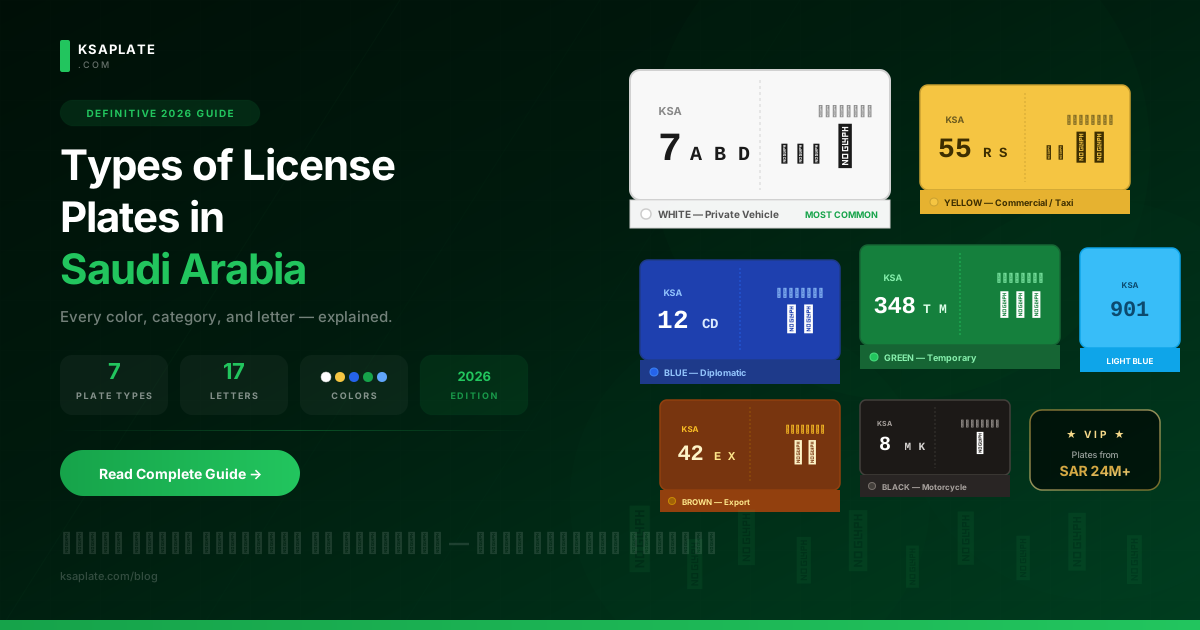
Saudi Arabia uses a color-coded system to instantly identify the category of every vehicle on the road. There are seven distinct plate colors, each assigned to a specific vehicle type:
| Plate Color | Vehicle Category | Issued To |
|---|---|---|
| White | Private | Individual vehicle owners — the most common plate |
| Yellow | Commercial / Taxi | Taxis, ride-hailing vehicles, commercial passenger transport |
| Blue | Diplomatic | Foreign embassy and consulate vehicles |
| Green | Temporary | Newly imported vehicles, temporary registrations |
| Light Blue | Public Transport | Buses, public transport vehicles |
| Brown | Export | Vehicles being exported out of the Kingdom |
| Black | Motorcycle | All registered motorcycles |
The color system helps traffic police, toll cameras, and insurance companies immediately classify a vehicle without needing to query a database. It also plays a role in certain traffic regulations — for example, commercial (yellow) plates are subject to different speed limits and parking rules in some municipalities.
White Plates — Private Vehicles
The white license plate is by far the most common type in Saudi Arabia. It is issued to all privately registered vehicles — sedans, SUVs, pickup trucks, and any car owned by an individual or family.
Key characteristics:
- White background with black text
- National emblem (palm tree and swords) in the center divider
- Arabic text on the right, English on the left
- 1–4 digit number + 1–3 letter series
White plates are the foundation of the distinctive plate market. When people talk about VIP plates or golden number plates, they are referring to white private plates with rare number-letter combinations. A single-digit white plate can sell for millions of riyals, while standard 4-digit plates are issued routinely during vehicle registration.
If you own a white plate with a desirable combination, you can list it for sale on KSAplate.com or check its estimated value using our plate calculator.
What's your plate worth?
Get an instant, free estimate with our plate value calculator.
Calculate My Plate's ValueYellow Plates — Commercial & Taxi Vehicles
The yellow plate identifies vehicles used for commercial passenger transport. You will see them on taxis, airport limousines, ride-hailing cars (Uber, Careem), and company-operated shuttle buses.
Key characteristics:
- Yellow background with black text
- Issued exclusively for vehicles licensed as commercial transport
- Subject to additional inspection and insurance requirements
- Cannot be transferred to private use without re-registration
Yellow-plate vehicles must pass stricter periodic inspections and carry commercial insurance. Drivers must hold a commercial driving license (known as a public vehicle license) in addition to their standard license.
With the rise of ride-hailing services since 2017, yellow plates have become increasingly common in major cities like Riyadh, Jeddah, and Dammam.
Blue Plates — Diplomatic Vehicles
The blue plate is reserved for diplomatic vehicles — cars registered to foreign embassies, consulates, and international organizations operating in Saudi Arabia.
Key characteristics:
- Blue background with white text
- Includes a country code identifying the embassy or mission
- Vehicles enjoy certain diplomatic immunities under the Vienna Convention
- Cannot be purchased, sold, or transferred by private individuals
Blue plates are concentrated in Riyadh’s Diplomatic Quarter (DQ) and around consulate areas in Jeddah. They are issued and managed by the Ministry of Foreign Affairs, not the General Directorate of Traffic.
Green Plates — Temporary Registration
The green plate is a temporary plate issued for vehicles that have not yet completed full registration. This typically applies to:
- Newly imported vehicles awaiting customs clearance
- Vehicles in transit between registration offices
- Cars with pending inspection or insurance documentation
Key characteristics:
- Green background with white text
- Valid for a limited period (usually 3–6 months)
- Must be replaced with a permanent plate once registration is complete
Green plates are common at car dealerships, especially those selling imported vehicles. You may also spot them on recently purchased cars being driven from one city to another before formal registration at the buyer’s local traffic office.
Light Blue Plates — Public Transport
The light blue plate (sometimes called "sky blue") is assigned to public transport vehicles — primarily buses operated by the Saudi Public Transport Company (SAPTCO) and municipal transit systems.
Key characteristics:
- Light blue background with white text
- Restricted to licensed public transport operators
- Common on inter-city coaches and urban buses
With Saudi Arabia’s investment in public transit — including the Riyadh Metro and Jeddah’s planned metro system — light blue plates are expected to become more visible in the coming years.
Brown Plates — Export Vehicles
The brown plate is issued to vehicles being exported from Saudi Arabia. These plates allow a car to be legally driven to a port or border crossing for shipment abroad.
Key characteristics:
- Brown background with white text
- Valid only for the export journey — not for general road use
- Issued by the traffic department upon proof of export documentation
Brown plates are most commonly seen on roads leading to Dammam’s King Abdulaziz Port, Jeddah Islamic Port, and the border crossings to Bahrain, UAE, Kuwait, and Jordan.
Black Plates — Motorcycles
The black plate is the standard plate for all registered motorcycles in Saudi Arabia.
Key characteristics:
- Black background with white text
- Smaller format than car plates
- Same bilingual Arabic-English format
- Uses fewer digits and letters due to smaller plate size
Motorcycle registration has grown since Saudi Arabia lifted the ban on motorcycle use in urban areas. The black plate ensures motorcycles are identifiable by speed cameras and traffic enforcement systems.
The 17 Arabic Letters Used on Saudi Plates
Not every Arabic letter appears on Saudi license plates. The General Directorate of Traffic permits only 17 out of 28 Arabic letters — specifically those that have a clear visual equivalent in the Latin alphabet. This ensures plates are readable in both Arabic and English.
The 17 permitted letters are:
| Arabic | English Equivalent | Arabic | English Equivalent |
|---|---|---|---|
| أ (Alef) | A | ن (Nun) | N |
| ب (Ba) | B | هـ (Ha) | H |
| ح (Haa) | U | و (Waw) | V |
| د (Dal) | D | ى (Ya) | E |
| ر (Ra) | R | ق (Qaf) | G |
| س (Sin) | S | ط (Tah) | T |
| ص (Sad) | X | ك (Kaf) | K |
| ع (Ain) | Z | ل (Lam) | L |
| م (Mim) | M | ||
The remaining 11 Arabic letters — such as ث (Tha), ج (Jim), خ (Kha), ذ (Thal), ز (Zay), ش (Shin), ض (Dad), ظ (Dha), غ (Ghain), ف (Fa), and ي (Ya variant) — are not used because they lack a clear, unambiguous Latin equivalent.
This letter restriction directly impacts the plate market. Some letter combinations spell meaningful words — for example, م ل ك (M-L-K) spells "King" (ملك) in Arabic, which makes these plates among the most valuable VIP plates in the Kingdom. Browse plates by letter: Alef (أ) · Ba (ب) · Dal (د) · Ra (ر) · Sin (س) · Kaf (ك) · Lam (ل) · Mim (م) · Nun (ن) · Jim (ج)
National Logo Plates (Vision 2030, Hegra, Diriyah & More)
Since 2023, Saudi Arabia has offered special logo plates through the Absher platform. These plates feature a national or cultural logo printed alongside the standard plate number. Available logos include:
- Vision 2030 — the official Saudi transformation logo
- Hegra (مدائن صالح) — the UNESCO World Heritage site
- Diriyah (الدرعية) — the historic first Saudi capital
- Saudi Founding Day — commemorating February 22
- Saudi National Day — celebrating September 23
Logo plates cost SAR 800 and can be ordered through Absher’s electronic services. They are available on white private plates only and have become a popular way for drivers to express national pride. The logo does not change the plate’s number or letter combination — it is an optional visual addition.
VIP & Distinctive Plates — The Premium Market
Saudi Arabia’s distinctive plate market is one of the largest in the world. "Distinctive" (مميزة) plates are private white plates with rare number-letter combinations that carry social prestige and, increasingly, investment value.
What makes a plate "distinctive"?
- Single-digit plates (e.g., 1, 7, 9) — the rarest category. A single-digit plate can sell for SAR 5–24 million at auction.
- Double-digit plates (e.g., 11, 50, 99) — highly sought after. Browse double-digit plates for sale.
- Repeating numbers (e.g., 1111, 5555) — a strong symbol of exclusivity. See repeating plates.
- Sequential numbers (e.g., 1234, 5678) — popular with collectors. Browse sequential plates.
- Mirror (palindrome) numbers (e.g., 1221, 3443) — aesthetically balanced. See mirror plates.
- Meaningful letter combinations — letters that spell words in Arabic (e.g., م ل ك = "King")
The most expensive Saudi plate ever sold at auction was plate number 1, which fetched over SAR 24 million. In 2025, the "King Plate" (م ل ك 1) sold for SAR 15.7 million, and rally champion Yazeed Al Rajhi paid SAR 10 million for his signature plate.
Distinctive plates are acquired through two channels:
- Absher electronic auctions — the government auctions new distinctive plates several times per year
- Private sales — owners sell their plates to other individuals, often through platforms like KSAplate.com
Once purchased, a distinctive plate can be transferred to another owner via Absher following the standard plate transfer process.
Plate Categories by Value — From Cheap to Premium
Not all distinctive plates cost millions. The market spans a wide range of budgets:
| Category | Price Range (SAR) | Examples | Browse |
|---|---|---|---|
| Cheap Distinctive | Under 2,000 | 4-digit unique combinations | View cheap plates |
| Under 5,000 | 2,000 – 5,000 | Meaningful 3-4 digit numbers | View under 5K |
| Under 10,000 | 5,000 – 10,000 | Triple digits, lucky numbers | View under 10K |
| Under 50,000 | 10,000 – 50,000 | Double digits, strong patterns | View under 50K |
| Golden | 50,000 – 100,000 | Rare doubles, premium triples | View golden plates |
| VIP | 100,000 – 500,000 | Repeating numbers, meaningful letters | View VIP plates |
| Luxury | 200,000 – 500,000 | Double digits with premium letters | View luxury plates |
| Premium | 500,000+ | Single digits, iconic combinations | View premium plates |
Use our plate value calculator to estimate what your current plate might be worth.
Popular Number Patterns and What Makes Them Valuable
In Saudi culture, certain number patterns carry special significance:
- Number 7 — considered the luckiest number; plates with 7, 77, 777, or 7777 command premium prices. Browse lucky number plates.
- Number 5 — associated with the five pillars of Islam; popular among religious buyers
- Number 1 — the ultimate status symbol; plate "1" is the most expensive plate in the Kingdom
- 2034 — the FIFA World Cup year; demand for 2034 plates has surged since Saudi Arabia was confirmed as host
- Repeating patterns (1111, 2222, etc.) — symbolize exclusivity and wealth. See all repeating plates.
- Sequential patterns (1234, 5678) — represent order and progression. See sequential plates.
- Mirror patterns (1221, 9009) — palindromic balance appeals to aesthetic buyers. See mirror plates.
The letter combination also matters. The most valuable letter sets spell words in Arabic — م ل ك (King), ح م د (Praise), or match the owner’s initials. Single-letter plates (one letter + one digit) are the rarest and most expensive format possible.
How to Buy a Distinctive Plate in Saudi Arabia
There are two ways to acquire a distinctive plate:
1. Absher Electronic Auction
The General Directorate of Traffic holds regular auctions through mazad.absher.sa. To participate:
- Log in to your Absher account
- Navigate to the auction section
- Browse available plates and place bids
- If you win, the plate is registered to your name and payment is processed electronically
Auction plates tend to be newly released numbers that have never been in circulation. Starting bids vary from SAR 1,000 to SAR 100,000+ depending on the plate’s rarity.
2. Private Purchase via KSAplate.com
Thousands of distinctive plates are already in circulation and owned by individuals. KSAplate.com is Saudi Arabia’s dedicated marketplace for buying and selling these plates:
- Browse available plates — filter by city, price, pattern, or letter
- Contact the seller directly through the platform
- Agree on a price and complete the transaction
- Transfer the plate via Absher — follow our step-by-step guide
Browse plates by city: Riyadh · Jeddah · Mecca · Medina · Dammam · Al Khobar · Tabuk · Abha · Hail · Taif · Jubail
Or browse by type: VIP Plates · Golden Plates · Cheap Plates · Luxury Plates · Premium Plates