
Last updated: May 19, 2026 · 14 min read
- A Saudi repeating license plate is any plate where all digits are identical — 11, 77, 99, 111, 777, 999, 1111, 7777, 9999.
- There are exactly 9 repeating combinations per digit class per letter group — making them 1,000× rarer than standard four-digit plates.
- The number on a repeating plate is everything: 9 (99 Names of Allah) and 7 (seven heavens) command the strongest premiums, while 1 (leadership/Tawhid) and 8 (prosperity) follow closely.
- Prices span SAR 5,000 for a standard 4-digit repeating plate to SAR 500,000+ for a 2-digit repeating plate with triple-same letters and a culturally resonant number.
- All repeating plates are simultaneously mirror plates — their palindrome nature means they qualify for both category premiums.
- Browse all active listings at KSAplate.com → Repeating Plates — no account required to search.
A Saudi repeating license plate is a private vehicle registration plate where every digit in the number is identical. The plates 11, 77, 99, 111, 777, 999, 1111, 7777, and 9999 are the canonical examples — each digit in the number repeats without variation. Repeating plates are the rarest numbered pattern in Saudi Arabia's secondary market: with only 9 combinations per digit class per letter group, they represent 0.1% of all four-digit plate combinations. On KSAplate.com, repeating plates are a dedicated category covering active listings from SAR 5,000 to above SAR 300,000, with trophy examples reaching beyond SAR 500,000 at Absher auctions.
Table of Contents
- What Is a Saudi Repeating License Plate?
- Repeating vs. Mirror vs. Sequential Plates
- Rarity — The Exact Math
- Which Number Commands the Highest Premium?
- Current Market Prices in 2026
- The Letter Multiplier Effect
- How to Find and Buy a Repeating Plate
- How to Spot a Fair Price
- Due Diligence Before You Pay
- Repeating Plates as an Investment
- Frequently Asked Questions
- Conclusion & Next Steps
What Is a Saudi Repeating License Plate?
A Saudi repeating license plate is a private vehicle registration where every digit in the numeric portion is the same character repeated. The repeating pattern covers all digit counts in the Saudi plate format:
- Two-digit repeating: 11, 22, 33, 44, 55, 66, 77, 88, 99 — nine total combinations.
- Three-digit repeating: 111, 222, 333, 444, 555, 666, 777, 888, 999 — nine total combinations.
- Four-digit repeating: 1111, 2222, 3333, 4444, 5555, 6666, 7777, 8888, 9999 — nine total combinations.
Across all digit counts, there are 27 repeating plate number combinations per letter group. This compares with 90 mirror plate combinations (palindromes that are not repeating), 14 sequential combinations, and approximately 8,877 standard four-digit combinations. Repeating plates are the scarcest numbered pattern in the Saudi market by a wide margin.
Importantly, every repeating plate is also a mirror plate. The number 7777 reads identically forwards and backwards — it is both a repeating plate and a palindrome. On KSAplate.com, repeating plates appear in both the Repeating Plates and Mirror Plates browse categories, and their pricing reflects premiums from both pattern types simultaneously. This dual classification is one reason repeating plates consistently command higher prices than equivalent-digit mirror plates that are not also repeating.
Key definition: A repeating plate has every digit identical. This automatically makes it a palindrome (mirror plate) too — so buyers receive both premiums in a single plate.
Repeating vs. Mirror vs. Sequential Plates
Three premium pattern types dominate Saudi Arabia's specialty plate market. Understanding how repeating plates differ from mirror and sequential plates is essential for navigating KSAplate.com's category filters — each pattern has a distinct rarity profile and market behavior.
| Pattern Type | Definition | 4-Digit Examples | Combinations/Group | SAR Range (2026) |
|---|---|---|---|---|
| Repeating | All digits identical | 1111, 7777, 2222, 9999 | 9 | 5,000 – 500,000+ |
| Mirror (non-repeating) | Palindrome, digits not all identical | 1221, 1331, 9009, 3443 | 81 | 800 – 60,000 |
| Sequential | Consecutive ascending or descending | 1234, 2345, 9876, 4321 | 14 | 3,000 – 200,000+ |
| Standard (no pattern) | No recognised premium pattern | 3847, 2619, 5083 | ~8,877 | 800 – 8,000 |
Why Repeating Plates Command a Separate Premium
Repeating plates sit at the extreme end of the rarity spectrum even within the premium pattern universe. A four-digit non-repeating mirror (like 1221) has 81 possible variants per letter group. A four-digit repeating plate (like 1111) has just 9. This 9:1 scarcity ratio within the mirror category is why repeating plates consistently price at 3×–10× equivalent non-repeating mirrors with similar numbers.
Beyond mathematical rarity, repeating plates benefit from a psychological premium: the visual impact of a plate displaying one digit four times is immediately striking and unambiguous. Unlike mirror plates where a casual observer might not notice the palindrome, a repeating plate communicates status and rarity at a glance.
What's your plate worth?
Get an instant, free estimate with our plate value calculator.
Calculate My Plate's ValueRarity — The Exact Math
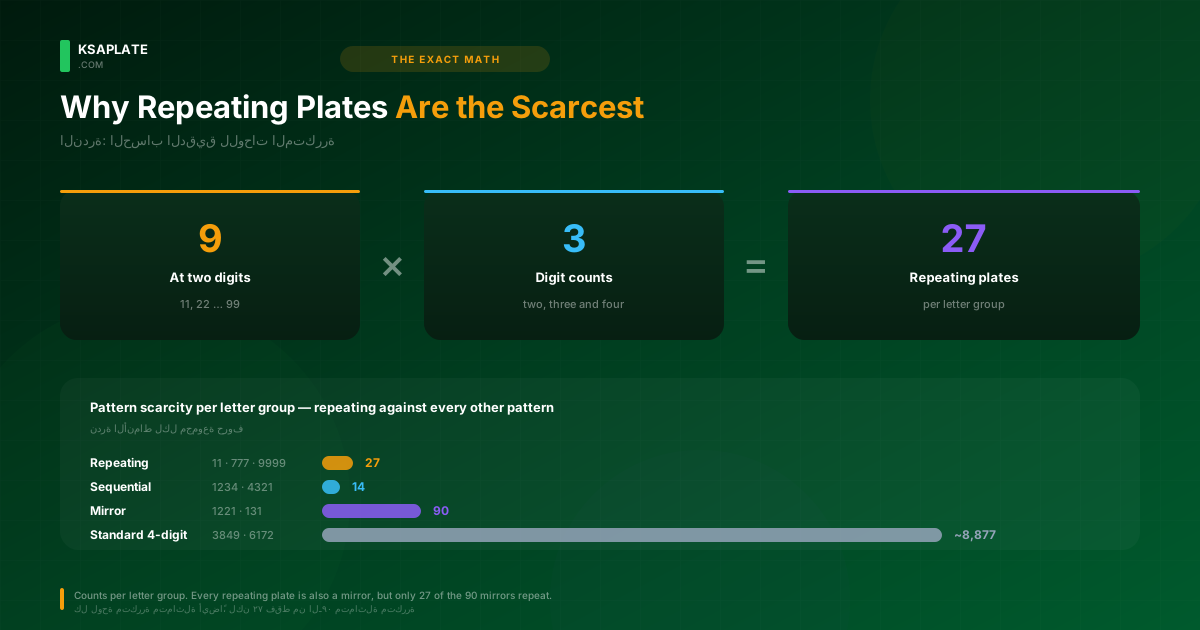
The scarcity of Saudi repeating plates is a mathematical certainty, not a marketing claim. The numbers are verifiable and fixed.
Four-Digit Repeating Plates
Among four-digit plates (numbers 1000–9999), the total universe is 9,000 combinations per letter group. Repeating plates within that range are numbers where all four digits are identical: 1111, 2222, 3333, 4444, 5555, 6666, 7777, 8888, 9999. There are exactly 9 four-digit repeating combinations — representing 0.1% of the four-digit universe. Against the 9,000-plate baseline, each four-digit repeating number is 1,000 times rarer than a standard four-digit plate from the same letter group.
Three-Digit Repeating Plates
Among three-digit plates (100–999), the total universe is 900 combinations per letter group. Three-digit repeating plates — 111 through 999 — number exactly 9 per letter group. They represent 1% of the three-digit universe. Against the 9,000 four-digit baseline, a three-digit repeating plate is 1,000 times rarer than a standard four-digit plate. Within the three-digit universe itself, each repeating plate is 100 times rarer than a standard three-digit number.
Two-Digit Repeating Plates
Among two-digit plates (10–99), the total universe is 90 combinations per letter group. Two-digit repeating plates — 11, 22, 33, 44, 55, 66, 77, 88, 99 — number exactly 9 per letter group. They represent 10% of the two-digit universe. However, the two-digit universe itself (90 combinations vs. 9,000 four-digit plates) is already 100 times rarer than the four-digit universe. A two-digit repeating plate is therefore 1,000 times rarer than a standard four-digit plate at the digit-class level.
| Digit Count | Repeating Examples | Count/Group | % of Digit Class | Rarity vs. Std. 4-Digit |
|---|---|---|---|---|
| 2-digit repeating | 11, 22 … 99 | 9 | 10% of 2-digit | ~1,000× rarer |
| 3-digit repeating | 111, 222 … 999 | 9 | 1% of 3-digit | ~1,000× rarer |
| 4-digit repeating | 1111, 2222 … 9999 | 9 | 0.1% of 4-digit | 1,000× rarer |
| 4-digit standard | 3847, 2619 … | ~8,877 | ~98.6% of 4-digit | Baseline |
KSAplate Insight: Repeating plates are the only Saudi plate category where the scarcity ratio (1,000×) is mathematically identical across all digit counts. Supply is capped by arithmetic — no new combinations can ever be created.
Which Number Commands the Highest Premium?
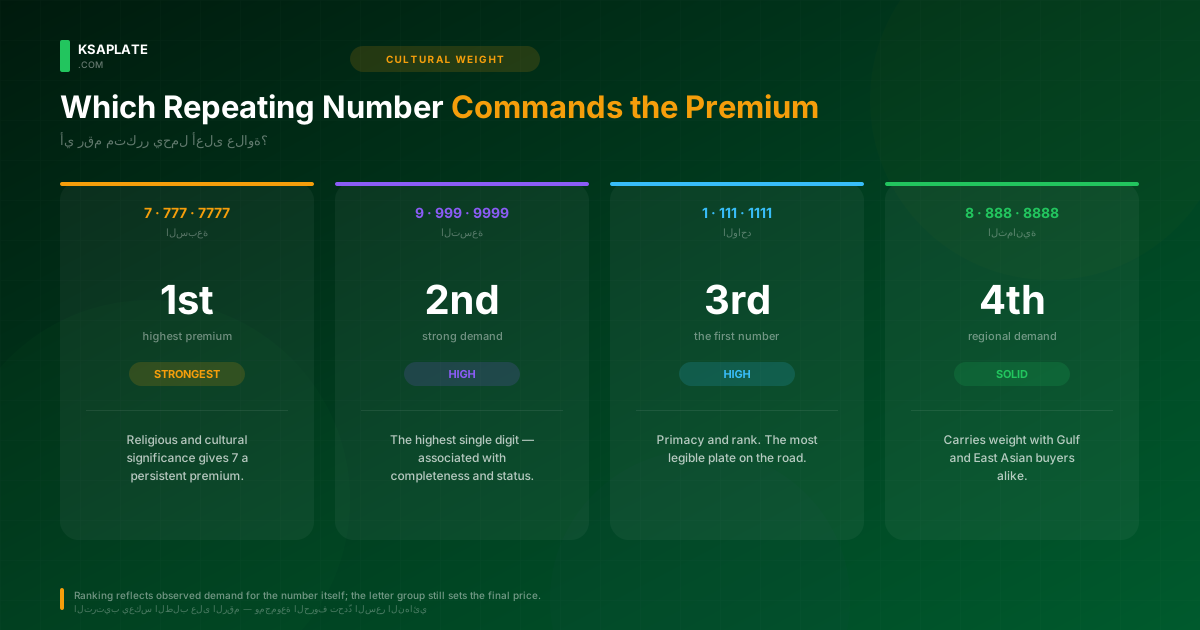
Within repeating plates, the specific digit determines a secondary premium layered on top of pattern rarity. Two factors drive digit-specific demand: Islamic cultural significance and cross-cultural number associations. Understanding the hierarchy of digit premiums is essential for buyers comparing listings and for investors evaluating which repeating plates offer the strongest long-term demand fundamentals.
Digit 9 — The Supreme Premium
The number 9 carries the highest cultural premium in Saudi Arabia's plate market, anchored by Asmaa ul Husna — the 99 Beautiful Names of Allah. This direct religious significance creates structural demand across Saudi Arabia's population regardless of income level, making 99, 999, and 9999 consistently the highest-priced repeating plates in active KSAplate.com listings. A plate like 999 with standard three-letter combination typically lists at SAR 90,000–180,000. With triple-same letters, comparable plates exceed SAR 300,000.
Digit 7 — Universal and Islamic Resonance
Seven holds dual cultural significance in Saudi Arabia: the seven heavens referenced in Islamic cosmology and the seven circuits of tawaf during Hajj. Combined with its universal "lucky number" status across cultures — creating cross-cultural bidder demand from expatriate communities — the number 7 ranks second in market pricing among repeating plates. Four-digit 7777 consistently outbids 8888, 6666, and all lower-digit repeating plates at Absher auctions, often by a margin of 40%–80%.
Digit 1 — Leadership and Tawhid
The number 1 anchors value in the concept of primacy — being first — and in the Islamic principle of Tawhid (the oneness of God). As a plate number, 1 carries the status association of being the lowest possible number, making 11, 111, and 1111 status symbols among corporate collectors and government-adjacent buyers. The two-digit plate 11 competes with 77 and 99 in premium market positioning.
Digit 8 — Cross-Cultural Prosperity
While 8 lacks specific Islamic cultural significance, it carries strong cross-cultural prosperity associations — particularly from East Asian business culture — that create incremental demand from Saudi Arabia's large expatriate business community. Plates 88, 888, and 8888 consistently outperform 5-digit equivalents (55, 555, 5555) at Absher auctions, with 888 often receiving 20%–40% more bids than comparable five-based plates.
Digit 5 — Five Pillars Premium
The five pillars of Islam (Shahada, Salat, Zakat, Sawm, Hajj) and the symbolic significance of the khamsa hand create a mid-tier premium for 5-based repeating plates. Plates 55, 555, and 5555 occupy the middle band of repeating plate pricing — meaningfully above 4, 3, 2 equivalents, but below 9, 7, 1, 8.
Digits 6, 4, 3, 2 — Pattern Premium Only
For digits 6 through 2, the premium is driven almost entirely by pattern rarity rather than cultural significance. Plates 66, 444, 2222 are still 1,000 times rarer than standard four-digit plates, but they lack the cultural demand layer that amplifies pricing for the top-tier digits. These are the most accessible entry points into repeating plate ownership and represent the clearest value-per-riyal proposition for buyers focused on pattern rarity without cultural number speculation.
Current Market Prices in 2026
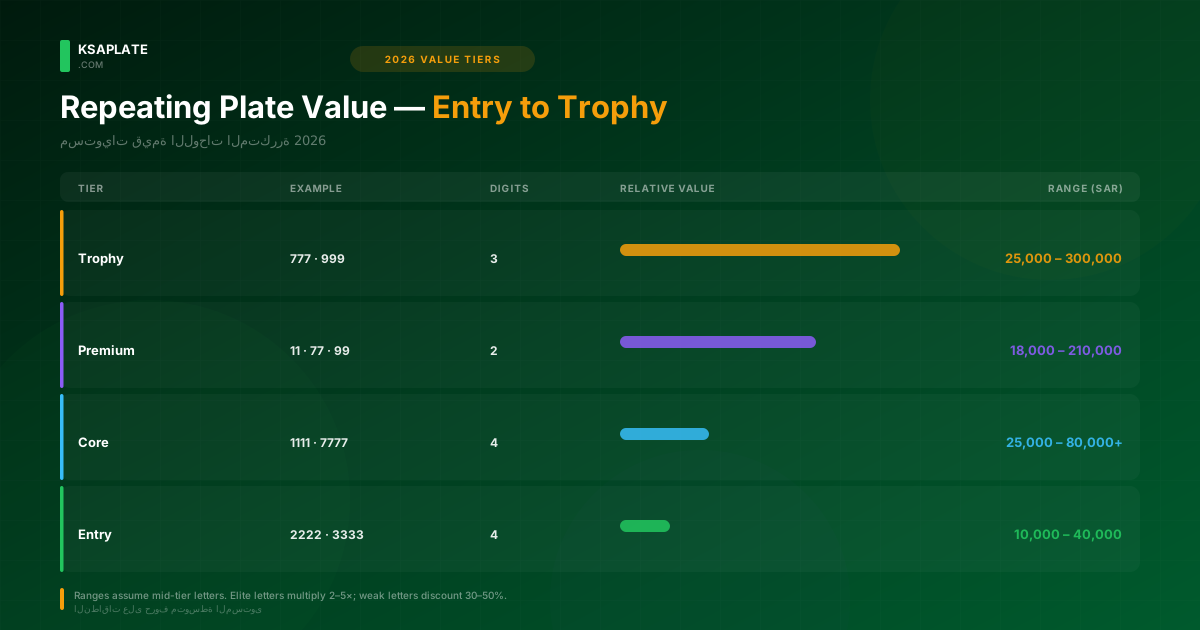
Repeating plate prices on KSAplate.com — based on active listings as of May 2026 — cluster into four bands driven by digit count, number significance, and letter combination.
Entry Level: SAR 5,000 – SAR 25,000
Four-digit repeating plates with standard three-letter combinations and digits 2 through 6 form the entry band. Despite being entry-level within the repeating plate category, these plates are still 1,000× rarer than standard four-digit plates. A plate like ب ر ط 2222 typically lists at SAR 5,000–12,000 on KSAplate.com — accessible for buyers seeking documented scarcity without reaching into five or six figures.
Mid-Market: SAR 10,000 – SAR 80,000
Four-digit repeating plates with digits 7, 9, 1, or 8 and three-digit repeating plates with standard letters populate this band. This is the most active trading segment in the repeating plate category. Plates like 7777, 9999, and 1111 with random letter combinations list at SAR 30,000–80,000; three-digit plates like 777 and 999 with standard letters trade at SAR 50,000–120,000.
Premium: SAR 80,000 – SAR 250,000
Two-digit repeating plates with standard letter combinations and three-digit repeating plates with triple-same-letter combinations occupy this range. The two-digit plates 77, 99, 11, and 88 with random three-letter combinations are the primary residents of this band. These are among the most liquid premium plates on KSAplate.com — high name recognition, clear pricing benchmarks, and strong buyer depth.
Trophy Tier: SAR 250,000+
Two-digit repeating plates with triple-same-letter combinations — ك ك ك 99, ح ح ح 77, ن ن ن 11 — occupy the trophy tier where multiple scarcity premiums stack simultaneously: two-digit digit class scarcity, repeating pattern rarity, triple-same-letter multiplier, and top-tier cultural number significance. Recent Absher auction results for plates in this configuration have exceeded SAR 400,000–500,000+.
| Plate Example | Pattern | Letter Type | SAR Range (May 2026) |
|---|---|---|---|
| ب ر ط 2222 | 4-digit repeating | Random 3-letter | 5,000 – 12,000 |
| ع ل ق 7777 | 4-digit repeating (cultural) | Random 3-letter | 30,000 – 80,000 |
| م ر ق 777 | 3-digit repeating | Random 3-letter | 50,000 – 120,000 |
| ن ز أ 77 | 2-digit repeating | Random 3-letter | 35,000 – 80,000 |
| [Any] 99 | 2-digit repeating (cultural) | Triple-same letter | 200,000 – 400,000+ |
| ح ح ح 77 | 2-digit repeating (cultural) | Triple-same (prestige) | 300,000 – 500,000+ |
The Letter Multiplier Effect
The letter combination on a Saudi plate is an independent value multiplier that stacks on top of the repeating pattern premium. In the repeating plate market, this multiplier is particularly powerful because two independent symmetry signals — all-identical digits and matching or identical letters — create a compound premium that exceeds the sum of their individual values.
Triple-Same-Letter Combinations
When all three letters are identical — ك ك ك, ص ص ص, ح ح ح, ب ب ب — the plate achieves absolute symmetry: three identical letters plus an all-identical-digit number. This configuration is the most prized in Saudi Arabia's plate market. Market data from KSAplate.com confirms a 3×–8× price premium above random-letter equivalents with the same repeating number. A triple-B letter plate ب ب ب 9999 consistently receives disproportionately higher inquiry volume and sells faster than any random-letter equivalent.
Two-Letter Combinations
Plates with only two Arabic letters — relics from earlier registration periods — carry an additional rarity premium: fewer letters plus an all-identical-digit number produces a dual rarity signal. These are rarely listed and typically attract immediate attention when they appear on KSAplate.com. Expect 5×–15× pricing above standard three-letter equivalents with the same repeating number.
Culturally Resonant Letter Combinations
Letter combinations that approximate Arabic words, sacred initials, or prestigious associations generate demand premiums when combined with a repeating number. The letter ح (Ha) carries particular cultural prestige — combinations like ح ح ح on any repeating plate generate disproportionately high buyer interest compared to other triple-letter configurations. When cultural letter significance combines with a top-tier repeating number (9, 7, 1), the result is a plate that attracts bidders who would otherwise be in different segments of the market.
For the complete letter value analysis covering all 17 approved Arabic letters, their rarity rankings, and their valuation effects on premium plate pricing, see the Arabic letters guide.
How to Find and Buy a Repeating Plate
Buying a Saudi repeating plate follows the same structured process as all premium plate transactions: discovery on KSAplate.com, negotiation with the seller, verification via Absher, and payment only after transfer confirmation. The process is well-established and takes 30–60 minutes from first contact to confirmed transfer.
Step-by-Step: Buying via KSAplate.com
- Define your target. Decide your digit count and preferred number before browsing. Are you acquiring for display (cultural number matters), investment (digit rarity plus cultural demand fundamentals), or gifting (number significance for recipient)? This framing prevents anchoring to overpriced listings before you have comparables.
- Navigate to Repeating Plates. Go to Browse → Repeating Plates on KSAplate.com to see all active same-digit listings automatically filtered. No account required to browse or compare.
- Use the price filter and digit-count filter to narrow to your target band. For first-time repeating plate buyers, the four-digit band (SAR 5,000–30,000) offers the best starting point — genuine 1,000× scarcity at the most accessible price points in the category.
- Compare at least three active listings with the same digit, same digit count, and similar letter types before contacting any seller. This gives you a real market floor and prevents paying above-market prices. Use the free KSAplate.com plate value calculator to validate your read on comparable prices.
- Contact the seller and negotiate. Sellers in the repeating plate category typically have 5%–15% flexibility from their listed price, especially for listings that have been active for more than 14 days. Always reference specific comparable listings when negotiating — vague "I've seen cheaper" is less effective than "ب ر ط 7777 is listed at SAR X on the same page."
- Initiate the Absher transfer. All Saudi plate transfers must complete via Absher → Vehicles → Transfer Plate Ownership. Both buyer and seller complete their digital steps. The process takes 10–20 minutes.
- Confirm transfer and release payment. Never pay — in full or partially — before the Absher transfer confirmation reference number is generated. Screenshot the confirmation. Payment follows confirmation, never precedes it.
Absher Plate Auctions for Repeating Plates
The General Directorate of Traffic releases newly issued plates through Absher's electronic auction system. Repeating plates appear in these auctions when newly issued combinations from recently approved letter groups are released to the public. Because repeating plate auction lots are immediately recognized by sophisticated bidders, competition is intense — bids often exceed opening prices by 100%–300% for 9, 7, and 1 numbers.
Auction strategy for repeating plates:
- Research KSAplate.com private market equivalents before any auction to set a rational ceiling price — auction environments create anchoring effects that can push bids above private market value.
- Pay the SAR 1,000 refundable deposit to qualify before the auction opens.
- Resist early bidding on 9, 7, and 1 numbers where competition will be highest — enter meaningfully only in the final 10–15 minutes.
- For digits 2 through 6, early bidding is sometimes effective since fewer sophisticated bidders compete for these combinations.
For the complete auction strategy framework, see the Absher auction step-by-step guide.
How to Spot a Fair Price
Repeating plate pricing in the Saudi secondary market is transparent once you have the right reference framework. The KSAplate.com market provides real-time price discovery — simply finding three to five active listings with the same digit, same digit count, and similar letter types gives you a reliable market range within minutes.
Use the free plate value calculator on KSAplate.com to get a data-driven estimate for any specific combination. The calculator recognizes repeating patterns automatically and applies the appropriate premium tier — including the cultural significance multiplier for digits 9, 7, 1, and 8 — when generating its market estimate.
Price Benchmarks by Segment (May 2026)
- Four-digit repeating, digits 2–6, standard letters: SAR 5,000–18,000. Median approximately SAR 9,000.
- Four-digit repeating, digits 7, 9, 1, 8, standard letters: SAR 25,000–80,000. Median approximately SAR 45,000.
- Three-digit repeating, standard letters: SAR 40,000–180,000 depending on digit.
- Two-digit repeating, standard letters: SAR 30,000–100,000+ depending on digit.
- Any repeating number, triple-same letters: Apply 3×–8× multiplier to the standard-letter baseline for the same number and digit count.
Red Flags in Repeating Plate Listings
- Price dramatically above comparables without explanation. If a 4-digit repeating plate lists at 3× comparable listings with no visible difference in letters or number significance, require a clear justification before engaging.
- Letter combination withheld. Any listing for a premium repeating plate that doesn't display the full three-letter combination is incomplete. Letters drive 30%–60% of value at premium price points — a listing omitting them is hiding information relevant to your decision.
- Pressure to pay quickly. Sellers of legitimate repeating plates do not need same-day decisions. Urgency pressure ("someone else is about to buy") is a negotiation tactic or warning sign. Real scarcity creates patience, not panic.
Due Diligence Before You Pay
For any repeating plate purchase above SAR 15,000, treat verification as mandatory before any payment discussion. The due diligence process for premium plate transactions in Saudi Arabia is standardized and straightforward:
- Verify Absher ownership. Ask the seller to confirm their full name as registered on Absher. When you initiate the transfer, the registered owner's full name appears on your screen. If it doesn't match the seller, stop immediately and require a notarized power of attorney from the actual registered owner before proceeding further.
- Confirm plate status. Plates with outstanding traffic fines, pledged as loan collateral, or under legal dispute are blocked from transfer by the Absher system — but verify before negotiating. Run the status check via Absher under Vehicles → Plate Information using the plate number and the seller's ID. A clean plate shows as transferable immediately.
- Never pay before Absher transfer initiation. No legitimate seller of a genuine repeating plate requires payment before the Absher transfer is initiated and confirmed. This single discipline eliminates the primary fraud vector in Saudi plate transactions.
- Screenshot everything. Screenshot the Absher transfer confirmation reference number. Keep full records of all price negotiations via the platform messaging system. These screenshots are your only documentation in any post-transfer dispute.
- Verify physical plate condition. If you plan to display the physical plate rather than holding it in an Absher digital wallet, confirm the physical plate condition before completing the transfer. Cosmetic damage does not affect legal ownership, but it affects resale presentation.
For the complete verification checklist covering all premium plate purchases in Saudi Arabia, see the safe buying and scam prevention guide.
Repeating Plates as an Investment
Repeating plates represent the most compelling investment case within Saudi Arabia's premium plate market for buyers who can absorb the five-to-six-figure entry cost of the top-demand digits. The investment thesis is built on three converging factors: mathematically capped supply, multi-layered cultural demand, and improving market infrastructure.
Fixed Supply — Verified by Math
The supply of Saudi repeating plates is not merely scarce — it is mathematically capped. There are exactly 9 four-digit repeating combinations, 9 three-digit, and 9 two-digit per letter group. These numbers cannot be expanded. When the General Directorate of Traffic opens a new letter group through Absher auctions, the 9 four-digit repeating plates in that group enter the market once and never again. Unlike physical assets where supply can be expanded or substituted, repeating plate supply is bounded by arithmetic.
Stacked Demand Signals
Repeating plates attract demand from multiple, non-overlapping buyer categories simultaneously:
- Status buyers: High-net-worth individuals seeking the most exclusive license plate designation for their primary vehicle. Repeating plates — particularly two-digit formats — are immediately recognizable as prestige items to any Saudi observer.
- Religious significance buyers: For digits 9 (99 Names of Allah) and 7 (seven heavens), demand extends beyond wealth-display motivation into personal religious expression. This is a deep, stable demand pool.
- Investment buyers: Sophisticated collectors who understand the supply cap and documented appreciation history, purchasing for portfolio appreciation rather than vehicle display.
- Gift buyers: Particularly for 99 and 77 combinations tied to Islamic milestones (Hajj, religious occasions), gift purchasing creates periodic demand spikes not correlated with luxury market cycles.
Documented Price Appreciation
Price data from Absher auction results and KSAplate.com private market listings shows clear appreciation across repeating plate segments since 2022:
- Four-digit repeating plates with digits 7, 9, 1 (standard letters) appreciated 50%–90% between 2022 and 2025 based on comparable auction versus private market listing data.
- Three-digit repeating plates (777, 999) with standard letters showed appreciation of 100%–200% over the same period, driven by demand from mid-tier investors entering the premium plate market.
- Two-digit repeating plates with high-demand digits showed more moderate appreciation in percentage terms but remain the most liquid exit point in the market — listings for 77, 99, and 11 receive consistent buyer inquiry without extended listing periods.
Risk Considerations
Repeating plate investment carries risks that buyers should assess honestly:
- Illiquidity for lower-demand digits. Plates with digits 2, 3, 4 take longer to sell than 9, 7, 1 equivalents. Budget for a longer holding period if investing in these numbers.
- Price concentrated in top digits. The appreciation documented above is concentrated in 9, 7, 1, and 8. Digits 6 and below appreciate more slowly.
- Market cycle sensitivity. Premium plate markets in Saudi Arabia are correlated with luxury spending confidence, which is influenced by oil prices and regional economic conditions. Buyers should size positions appropriately relative to overall portfolio exposure.
For the complete investment methodology covering ROI analysis, liquidity considerations, and portfolio sizing across all premium plate categories, see the Saudi plate investment guide.
Investment note: The strongest repeating plate investment positions in 2026 are 4-digit repeating plates with digits 7, 9, or 1 and standard letter combinations — representing the best combination of verifiable scarcity, strong cultural demand fundamentals, and accessible entry price relative to the two-digit and three-digit tiers.
Frequently Asked Questions
What is a repeating plate in Saudi Arabia?
A Saudi repeating plate is a private license plate where all digits in the number are identical — 11, 77, 99, 111, 777, 999, 1111, 7777, 9999. With only 9 combinations per digit class per letter group, they are the rarest number pattern in the Saudi plate market. All repeating plates are also mirror plates (palindromes), so they qualify for both category premiums simultaneously.
How many repeating plate combinations exist in Saudi Arabia?
There are exactly 9 two-digit repeating combinations (11–99), 9 three-digit (111–999), and 9 four-digit (1111–9999) per Arabic letter group — 27 repeating combinations per letter group total. This is fixed by mathematics and cannot be expanded. For context, there are 9,000 total four-digit combinations per letter group, making each four-digit repeating plate 1,000 times rarer than a standard four-digit plate.
Which repeating plate number is the most valuable?
Among repeating plate numbers, 9 (the 99 Names of Allah cultural significance) consistently commands the highest prices — 99, 999, and 9999 lead their respective digit-count segments. Number 7 (seven heavens, seven tawaf circuits) is second, followed by 1 (primacy, Tawhid) and 8 (prosperity). For the highest absolute prices, two-digit repeating plates with triple-same-letter combinations — ح ح ح 99 or ك ك ك 77 — represent the trophy tier at SAR 300,000–500,000+.
What is the difference between a repeating plate and a mirror plate?
A repeating plate has all identical digits (1111, 7777). A mirror plate has a palindrome number (reads the same both ways) but digits need not be identical — 1221 is a mirror plate, not a repeating plate. All repeating plates are also mirror plates (7777 reads the same backwards), but most mirror plates are not repeating plates. On KSAplate.com, repeating plates appear in both category filters, and their pricing reflects both premiums simultaneously.
How much do repeating plates cost in Saudi Arabia?
Repeating plate prices in 2026 range from SAR 5,000 for a standard four-digit repeating plate with lower-demand digits (2222, 3333) and random letters, to SAR 300,000–500,000+ for trophy-tier two-digit repeating plates with triple-same-letter combinations and digits 9 or 7. The most actively traded segment — four-digit repeating plates with digits 7, 9, or 1 and standard letters — typically lists at SAR 30,000–80,000 on KSAplate.com.
Can I hold a repeating plate without attaching it to a vehicle?
Yes. Saudi Arabia's Absher plate wallet allows you to hold any purchased plate in digital custody without attaching it to a vehicle. This is fully legal and commonly used by investment buyers, gift purchasers, and collectors between vehicles. The plate sits in your Absher digital wallet and can be transferred or attached at any time.
Where can I find repeating plates for sale in Saudi Arabia?
A dedicated marketplace is KSAplate.com. Navigate to Browse → Repeating Plates to see all active same-digit listings automatically filtered. All transfers complete via Absher. No account is required to search and compare listings — you only need an account to contact sellers or list your own plate.
Are repeating plates a better investment than mirror plates?
Repeating plates offer a higher rarity multiple (1,000× vs. 100× for four-digit mirrors) and more immediately recognizable visual impact, which supports stronger demand from status buyers. However, their higher entry prices mean smaller absolute numbers of buyers at each tier. Four-digit mirror plates (non-repeating palindromes like 1221) offer better price accessibility with the same mathematical scarcity ratio within their digit class. The best investment choice depends on your budget and hold horizon — see the Saudi plate investment guide for a full comparison.
Is there a calculator for repeating plate values?
Yes. The free plate value calculator on KSAplate.com accepts any Saudi plate combination and returns a market-based estimate using current listing data. For repeating plates, the calculator automatically recognizes the all-identical-digit pattern, applies the 1,000× scarcity premium, and adjusts for digit cultural significance (9, 7, 1, 8 vs. lower digits) and letter combination type in its model.
Conclusion & Next Steps
Last updated: May 19, 2026
Saudi repeating license plates occupy the apex of the pattern plate market by one simple measure: supply. With exactly 9 combinations per digit class per letter group, they are mathematically the rarest numbered pattern available in Saudi Arabia's private plate system. Combined with cultural number premiums — particularly for digits 9, 7, and 1 — and the triple-same-letter multiplier that stacks on top of pattern rarity, the highest-value repeating plates represent some of the most defensible luxury asset positions in the Kingdom's alternative investment landscape.
Three variables determine every repeating plate's value: the digit (cultural significance dictates the premium above pure rarity), the digit count (fewer digits means rarer overall), and the letter combination (triple-same letters multiply baseline value by 3×–8×). Understanding these three variables lets you evaluate any repeating plate listing accurately before contacting the first seller — and identify overpriced listings before committing time to negotiation.
Browse Repeating Plates For Sale Now
Same-digit plates from SAR 5,000 — all 27 number types, hundreds of letter combinations.
Search Repeating Plates →Related resources to support your repeating plate journey:
- Saudi Mirror Plates Complete Guide — Full guide to palindrome plates including the 81 non-repeating mirror combinations.
- Plate Value Calculator — Free tool for any Saudi plate combination, recognizes repeating patterns automatically.
- How to Bid at Absher Plate Auctions — Strategy for acquiring newly released repeating plates at government auction.
- Arabic Letters Saudi Plate Guide — Full analysis of all 17 approved letters, rarity rankings, and letter multiplier effects on repeating plate values.
- Saudi License Plates as Investments — ROI methodology and market outlook for 2026 across all premium plate categories.
- How to Transfer a Plate via Absher — Step-by-step guide for completing your purchase once price is agreed.