TL;DR:
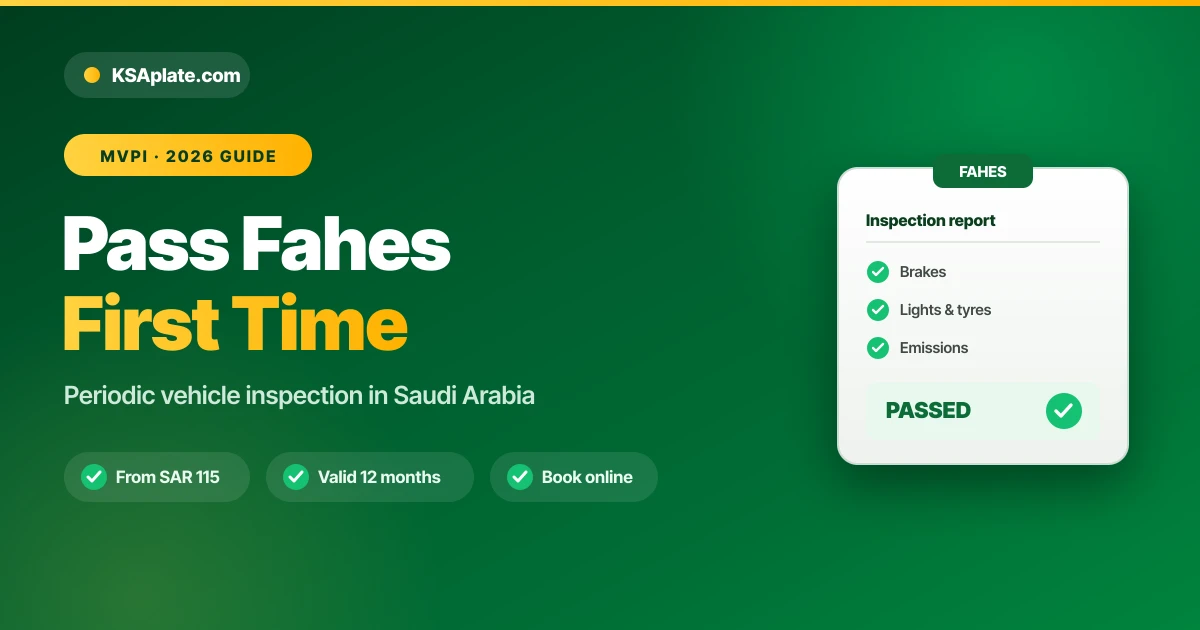
- Fahes is Saudi Arabia's mandatory periodic vehicle inspection (MVPI) — a safety and emissions test your car must pass to stay road-legal.
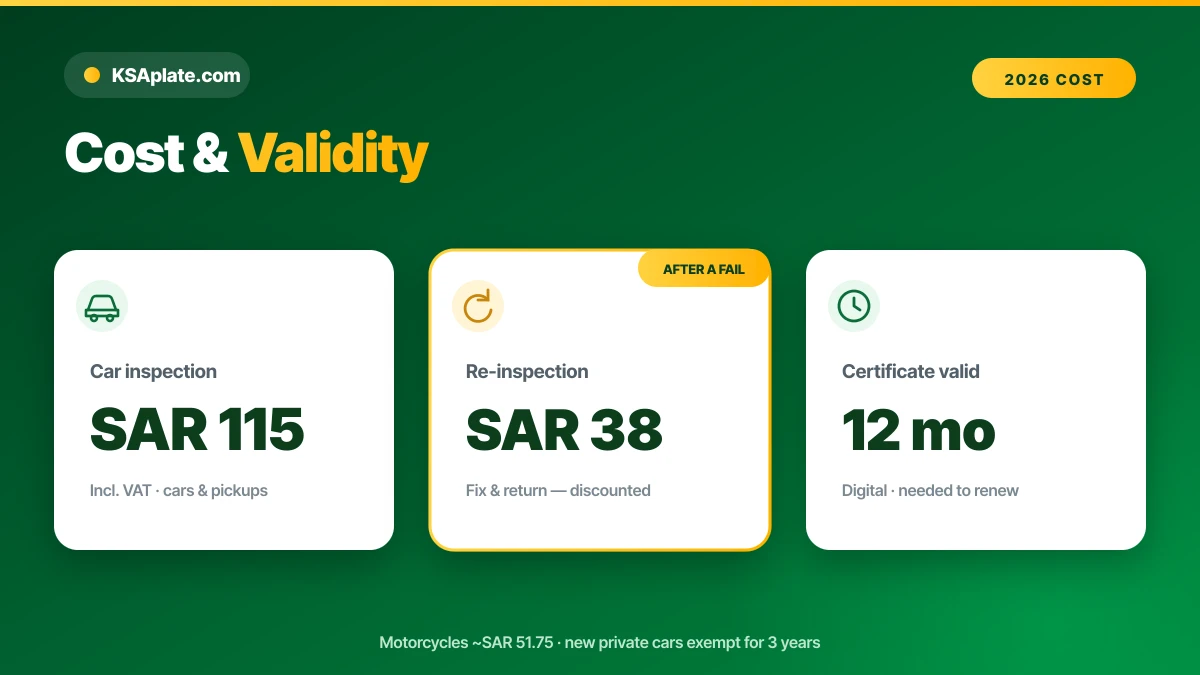
- It costs about SAR 115 (incl. VAT) for a car; a re-inspection after a fail is only SAR 37.95. The report is valid 12 months.
- New private cars are exempt for 3 years from first registration, then inspected annually; taxis and buses start at 2 years.
- A valid Fahes is required to renew your istimara (registration) — no pass, no renewal and no ownership transfer.
- Book on the MVPI platform with your Iqama, or walk in to a certified centre; the test takes about 15–30 minutes.
Quick answer: Fahes is the periodic technical inspection every registered vehicle in Saudi Arabia must pass. Book on the MVPI platform, bring your istimara and ID, and pay about SAR 115. Technicians check brakes, suspension, lights, tyres, steering, and emissions. A pass is valid for 12 months and is required before you can renew your vehicle registration.
What Fahes is in Saudi Arabia
Fahes (فحص) is the Motor Vehicle Periodic Inspection (MVPI) in Saudi Arabia — the official safety and emissions test a registered vehicle must pass at set intervals. The word "fahes" simply means "inspection" in Arabic. The programme is run through a national network of certified inspection centres under the General Directorate of Traffic (Moroor), and results are linked directly to your vehicle record.
The goal is simple: keep unsafe and heavily polluting vehicles off the road. A trained technician checks the car against a fixed standard and issues a pass or a list of defects. The digital result feeds straight into the traffic system, which is why Fahes sits at the centre of every other vehicle service.
Why Fahes is mandatory
Fahes is mandatory because a valid inspection is a condition for keeping a car legally registered. Without a current Fahes certificate you cannot renew your istimara, and you cannot complete an ownership transfer. Driving a vehicle whose registration has lapsed because of an expired inspection exposes you to traffic fines.
In short, Fahes is the gatekeeper of the vehicle lifecycle in Saudi Arabia. It links to insurance, registration, and resale — so a lapsed inspection quietly blocks several things at once. There is also a safety dividend: regular checks catch worn brakes and bald tyres before they cause a crash, which is the whole reason the programme exists. If you are renewing your registration, read our guide to renewing the istimara via Absher, where Fahes is the first prerequisite.
Who needs Fahes and the new-car exemption
Almost every vehicle on Saudi roads needs periodic inspection — but new vehicles get a grace period before the first test.
| Vehicle type | First inspection | After that |
|---|---|---|
| New private car | 3 years after first registration | Every year |
| Taxi / bus / public transport | 2 years after first registration | Every year |
| Used / older private car | Already due | Every year |
| Heavy / commercial vehicle | As specified by class | Annually or more often |
After the exemption ends, inspection becomes an annual requirement. The system tracks your due date from the first registration, so a brand-new car bought in 2026 will not need its first Fahes until 2029.
What's your car worth?
Get a free instant estimate based on real Saudi market data — then sell it on KSAplate with direct WhatsApp contact.
Value My Car — FreeHow much Fahes costs (2026)
Fahes is inexpensive. A standard car inspection costs about SAR 115 including VAT, and a re-inspection after a fail is heavily discounted.
| Service | Fee (SAR, incl. VAT) |
|---|---|
| Car / pickup — inspection | ~115 |
| Car / pickup — re-inspection | ~37.95 |
| Motorcycle — inspection | ~51.75 |
| Motorcycle — re-inspection | ~17.25 |
| Heavy / commercial | Higher, by class |
You pay at the centre or online when booking. The low re-inspection fee is deliberate: it lets you fix a minor defect and return without paying the full price again.
What Fahes checks
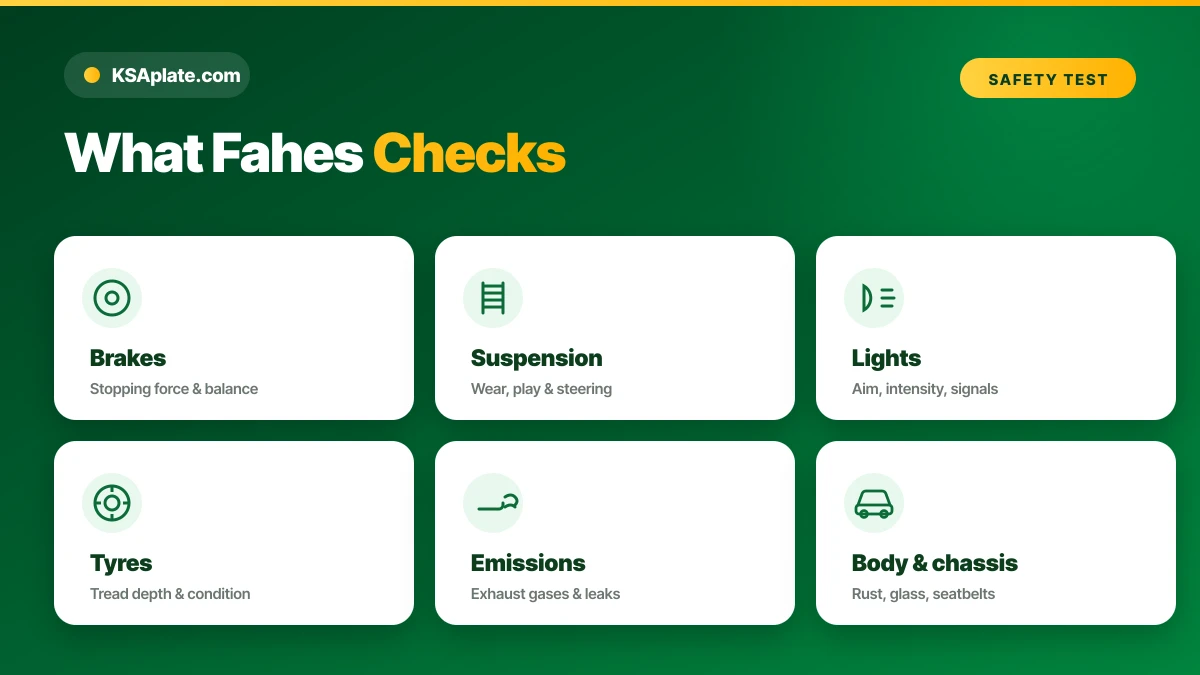
Fahes is a structured technical check, not a casual look-over. A technician runs the car through visual, underside, and machine tests covering the systems that affect safety and emissions.
- Brakes — performance and balance on a brake tester.
- Suspension and steering — wear, play, and alignment.
- Lights — headlight aim and intensity, indicators, brake lights.
- Tyres — tread depth, condition, and matching sizes.
- Emissions and exhaust — tailpipe gases and leaks.
- Body and underside — chassis, rust, windshield, seatbelts.
Fahes is pass-or-fix: anything that fails is listed item by item, so you know exactly what to repair before the re-inspection.
Emissions and the engine light
Emissions are the single most misunderstood part of Fahes. The test measures the gases leaving your tailpipe against a legal limit, and a car that burns oil, runs rich, or has a faulty catalytic converter will fail. The clearest warning sign is the dashboard engine light: if it is on, the car is almost certainly storing an emissions-related fault code, and the inspection will catch it.
Do not clear the code and drive straight to the centre. Modern systems flag that the monitors are "not ready," and the inspection can reject the car for that alone. Fix the underlying cause — a worn oxygen sensor, a loose fuel cap, or a tired spark plug — then drive normally for a day or two so the system re-checks itself before you go. Diesel owners should watch for visible smoke, which is an immediate flag for the technician.
How to book Fahes on the MVPI platform
Booking is online and takes a couple of minutes. You can also walk in to a certified centre, though an appointment avoids the queue.
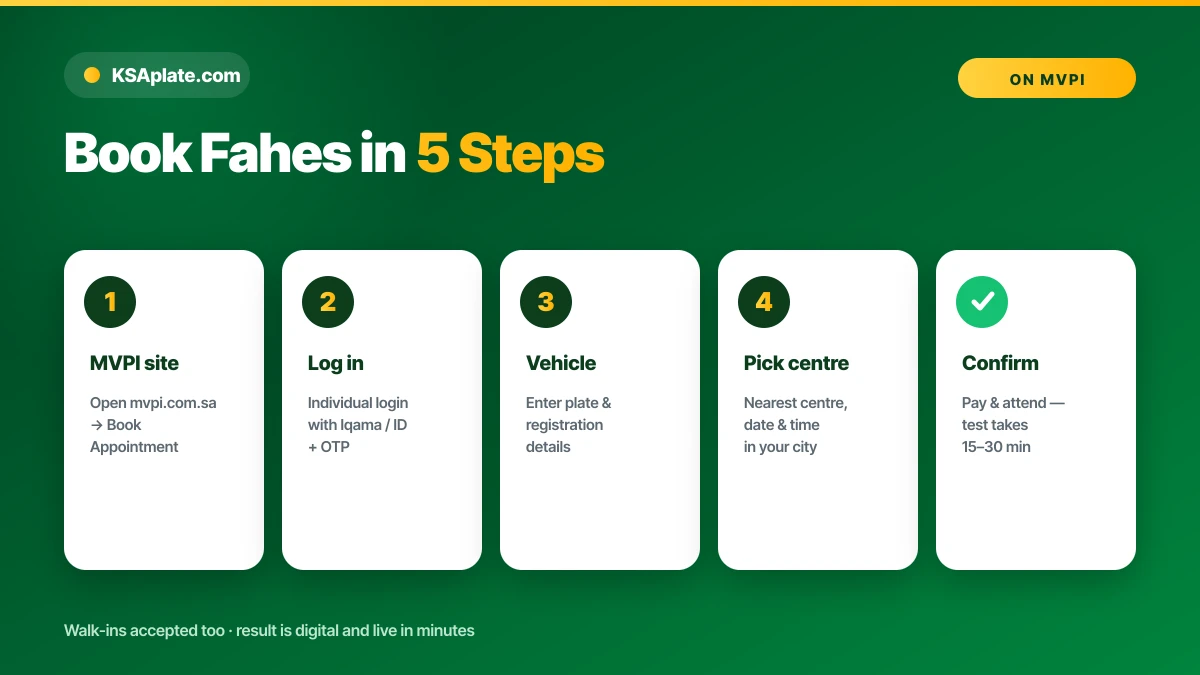
- Open the MVPI platform (mvpi.com.sa) and choose Book Appointment.
- Select Individual Login and sign in with your Iqama or national ID and OTP.
- Enter your vehicle details (plate and registration).
- Pick the nearest centre, date and time in Riyadh, Jeddah, Dammam or your city.
- Confirm and pay. Arrive on time; the test itself takes about 15–30 minutes.
What to bring to the inspection
Keep the paperwork light but complete so the centre can process you without delay.
- Your Iqama or national ID.
- The vehicle registration (istimara).
- The appointment confirmation (if you booked online).
- For imported vehicles, the customs card.
The car itself should be in normal running condition — fuelled, with working lights and properly inflated tyres.
What to expect on inspection day
The visit is short and standardised. You drive to the centre, hand over your details at the lane entrance, and a technician takes the car through a fixed sequence while you wait nearby. Expect roughly 15 to 30 minutes from the moment your turn starts.
The car moves through stations: a brake tester measures stopping force on rollers, a headlight aligner checks beam height, an emissions probe samples the exhaust, and a technician inspects the underside on a ramp for suspension play and rust. At the end you receive a digital result — a pass that is live in the system within minutes, or an itemised defect list if anything failed. Arriving with a clean, fuelled car and properly inflated tyres keeps the whole visit on the short end of that range.
Where to get Fahes done
Fahes is carried out at certified MVPI centres spread across every region of Saudi Arabia — you will find them in Riyadh, Jeddah, Dammam, Mecca, Medina and most major cities. All certified centres apply the same national standard and the same fees, so the result is identical wherever you go; you are simply choosing the most convenient location.
Two practical tips. First, book an appointment rather than walking in during peak times — early mornings and the days just before month-end are busiest as drivers rush to beat istimara deadlines. Second, if a centre is near a parts shop, you can fix a minor fail and return for the discounted re-inspection the same day. Choose a centre with short reported wait times, and you can be in and out inside half an hour.
How long Fahes is valid
A passed Fahes certificate is valid for 12 months. The result is digital and linked to your vehicle, so there is usually no paper to carry. Plan your inspection a little before your istimara is due, because the registration renewal will check that the Fahes is current. Aligning the two dates means one annual errand instead of two.
If your car fails: the re-inspection
A fail is not a fine — it is a to-do list. The centre gives you an itemised report of every defect that did not meet the standard. You repair those items, then return for a re-inspection at the reduced fee (about SAR 37.95 for a car). Bring the car back within the validity window of the failed result so you keep the discounted rate rather than paying for a fresh test.
A failed Fahes costs you a repair and SAR 38 — not a full re-test. Fix the listed items and come straight back.
How to pass Fahes the first time
Most failures are avoidable. A ten-minute pre-check at home fixes the items that trip up the majority of cars. Run through this list before you drive to the centre.
- Lights: test every bulb — headlights, brake lights, indicators, plate light.
- Tyres: check tread depth and pressure; replace anything bald or cracked.
- Brakes: listen for grinding and confirm the car stops straight.
- Windshield: repair chips in the driver's view and check the wipers.
- Fluids and leaks: top up, and look for drips under the car.
- Warning lights: clear any dashboard fault, especially the engine light, which signals emissions issues.
Spending a little on bulbs and tyres beforehand is cheaper than a wasted trip and a re-inspection.
Fahes and istimara renewal
Fahes and registration renewal are two steps of one process. You cannot renew your istimara without a current Fahes — Absher checks the inspection status before it lets the renewal through. The correct order is Fahes → insurance → clear fines → renew. If you are buying a used car, the same inspection logic applies; our used-car buying guide explains the pre-purchase check, while this article covers the official periodic test you will repeat every year afterward.
Expats and Iqama holders
Expatriates use Fahes exactly like citizens. You book with your Iqama number on the MVPI platform, bring the istimara and your ID, and pay the same fees. There is no separate process and no surcharge. Make sure your Iqama is valid, because an expired residency permit can block linked vehicle services such as the istimara renewal that follows the inspection.
Heavy, commercial and motorcycles
The test exists for every class, but the fee and frequency change with the vehicle. Motorcycles pay a lower fee (about SAR 51.75, with a SAR 17.25 re-inspection). Taxis, buses and public-transport vehicles start inspections earlier — two years from first registration — and may be checked more than once a year because of their mileage. Heavy trucks carry higher fees set by class. Whatever the vehicle, the pass/fix logic and the 12-month validity work the same way.
Can you sell or transfer a car without valid Fahes?
No. An ownership transfer in Saudi Arabia requires a valid registration, and a valid registration requires a current Fahes. If the inspection has lapsed, the sale stalls until you renew. For a smooth sale, pass Fahes and renew the istimara first, then complete the transfer — see how to transfer car ownership. The same record is what a careful buyer verifies before paying, as covered in our plate and vehicle verification guide.
Selling your car? List it on KSAplate for free
No commission on the sale, no account needed, and buyers contact you directly on WhatsApp. Keep or sell the plate separately.
List your car freeCommon mistakes that cause a fail or delay
- Ignoring the dashboard engine light — it usually means an emissions fail.
- Bald or mismatched tyres — an easy, common rejection.
- Blown bulbs — a SAR 10 fix that fails the whole test.
- Letting the result expire before renewing the istimara.
- Missing the re-inspection window and paying full price again.
- Expired Iqama blocking the linked services after the test.
Frequently asked questions
How much does Fahes cost in Saudi Arabia in 2026?
How long is a Fahes certificate valid?
Do new cars need Fahes?
What does Fahes check?
What happens if my car fails the inspection?
Can I renew my istimara without a valid Fahes?
Can an expat book Fahes?
How do I book a Fahes appointment?
How long does the inspection take?
Can I sell my car if the Fahes has expired?
Why does the engine warning light cause a Fahes fail?
Do I need an appointment or can I walk in?
Conclusion & next steps
Fahes is quick, cheap, and the key that unlocks every other vehicle service in Saudi Arabia. Do a ten-minute pre-check, book on the MVPI platform, and you will usually pass first time and hold a valid certificate for a year. Keep the inspection, insurance, and registration dates aligned and the whole cycle becomes one painless annual task. Ready for the next step? Renew your istimara via Absher, or browse the KSAplate marketplace when it is time to buy or sell.