آخر تحديث: 31 مايو 2026 · 11 دقيقة قراءة
- التحقق من لوحة ترخيص سعودية يعني تأكيد أن البائع يمتلكها فعلاً وأنه يمكن نقلها قانونياً — قبل أن تدفع أي شيء.
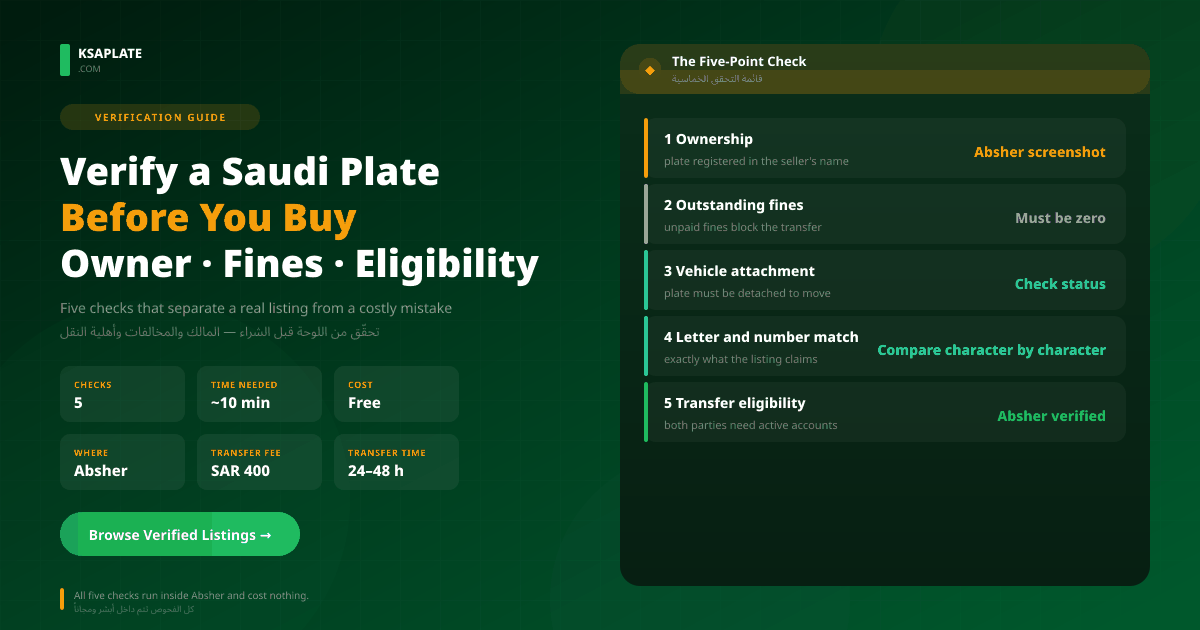
- قم بإجراء خمس فحوصات: تطابق هوية المالك مع الاستمارة، تطابق تفاصيل اللوحة، عدم وجود غرامات مستحقة، فحص وتأمين ساري، ويمكن للبائع بدء النقل في أبشر.
- تتم جميع عمليات نقل الملكية على منصة أبشر الرسمية — أبداً عبر قنوات غير رسمية.
- لا تدفع المبلغ بالكامل قبل بدء نقل أبشر؛ استخدم خدمة الضمان للصفقات ذات القيمة العالية.
- هذا الدليل هو جزء من سلسلة الشراء والبيع الآمن من KSAplate.
للتحقق من لوحة سعودية قبل الشراء، اطلب من البائع لقطة شاشة للاستمارة (تسجيل المركبة) تظهر اللوحة واسمهم، تأكد من عدم وجود غرامات مستحقة، واطلب منهم بدء النقل في أبشر. أطلق الدفع فقط بعد بدء النقل.
التحقق من لوحة ترخيص سعودية هو عملية تأكيد، قبل الدفع، أن البائع يمتلك اللوحة قانونياً وأنها مؤهلة للنقل. إنها الخطوة الأكثر أهمية التي يتخذها المشتري، لأنه في السعودية، تعتبر اللوحة المميزة أصلاً مسجلاً — والمال المرسل لشخص لا يمتلكها فعلياً من المستحيل تقريباً استرداده. يوضح هذا الدليل بالضبط ما يجب التحقق منه وكيف، باستخدام منصة أبشر الرسمية التي تديرها الإدارة العامة للمرور (مرور).
لماذا يعتبر التحقق مهمًا
يمكن أن تكون لوحة مميزة سعودية تستحق من بضع مئات إلى عدة ملايين من الريالات السعودية. هذه القيمة تجعل اللوحات هدفًا للاحتيال: قوائم مزيفة، بائعون لا يمتلكون اللوحة، وضغوط للدفع قبل أي خطوة رسمية. يزيل التحقق من المخاطر. بمجرد أن تؤكد الملكية وأهلية النقل، تصبح الصفقة آمنة — لأن النقل الفعلي يتم تسجيله في قاعدة البيانات الوطنية للمرور عبر أبشر.
القاعدة الذهبية لشراء لوحة في السعودية: لا تخرج أي أموال من حسابك حتى يبدأ نقل أبشر.
قائمة التحقق من 5 نقاط
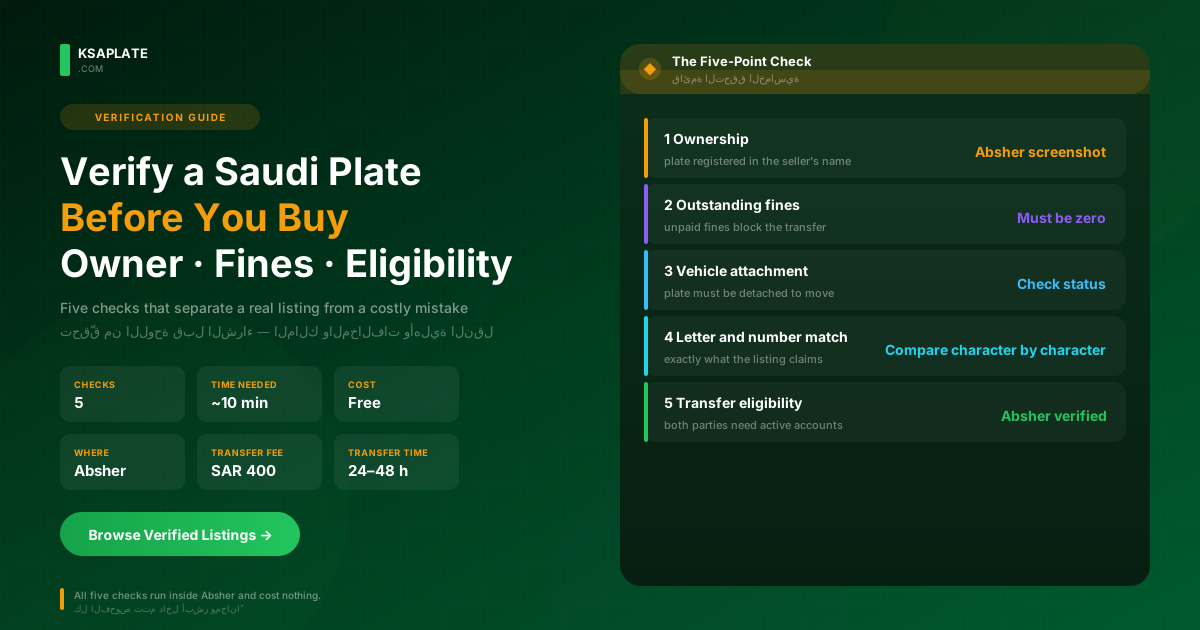
كل عملية شراء آمنة تؤكد هذه النقاط الخمس. إذا فشل أي منها، توقف.
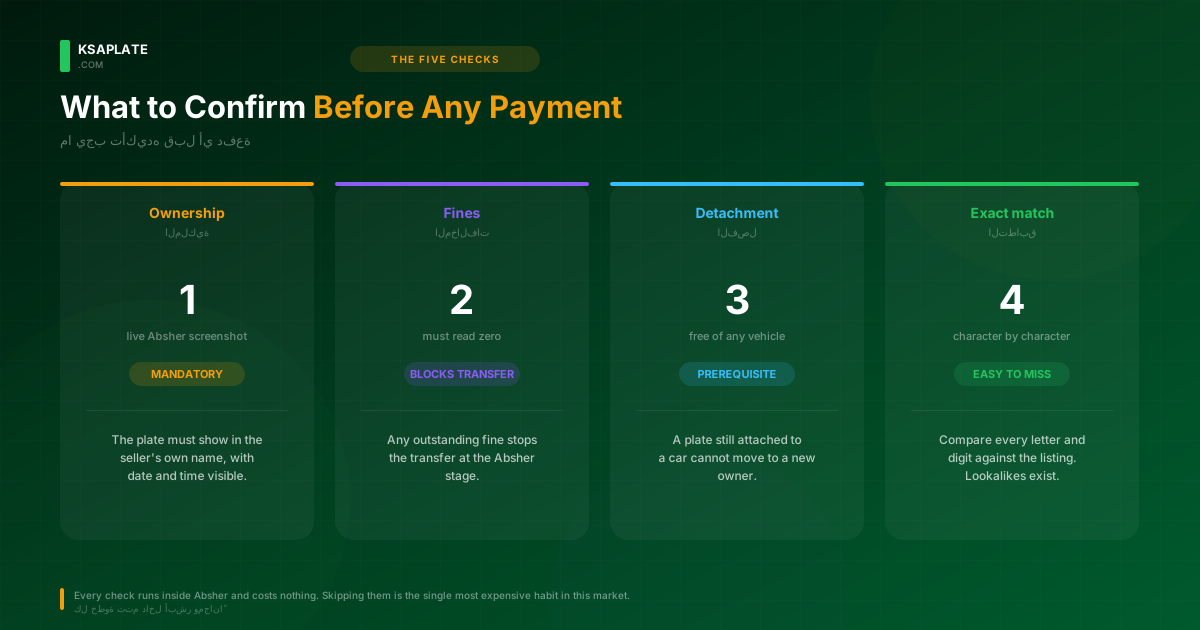
- هوية المالك — الاسم على الاستمارة يتطابق مع الشخص الذي تتعامل معه.
- تفاصيل اللوحة — الأرقام، الحروف العربية والشعار تتطابق تمامًا مع القائمة.
- عدم وجود غرامات مستحقة — المخالفات المرورية غير المدفوعة (مخالفات) تمنع أي نقل.
- فحص وتأمين ساري — يتطلب وجود شهادة فحص سارية وتامين نشط.
- قدرة النقل — يمكن للبائع فعلاً بدء النقل في أبشر.
كيفية قراءة الاستمارة
الاستمارة هي بطاقة تسجيل المركبة السعودية. لعملية التحقق من اللوحة، تهم ثلاثة حقول: الاسم الكامل للمالك، رقم اللوحة والحروف، وحالة التسجيل. اطلب من البائع لقطة شاشة واضحة أو صورة من حسابهم في أبشر أو البطاقة الفعلية. تأكد من أن اللوحة المعروضة مطابقة تمامًا للقائمة، وأن اسم المالك يتطابق مع الشخص الذي يتفاوض معك. أي عدم تطابق هو سبب للتوقف الفوري.
خطوات التحقق خطوة بخطوة في أبشر
اتبع هذه الخطوات بالترتيب. تتحرك من الفحوصات ذات الالتزام المنخفض إلى النقل نفسه.
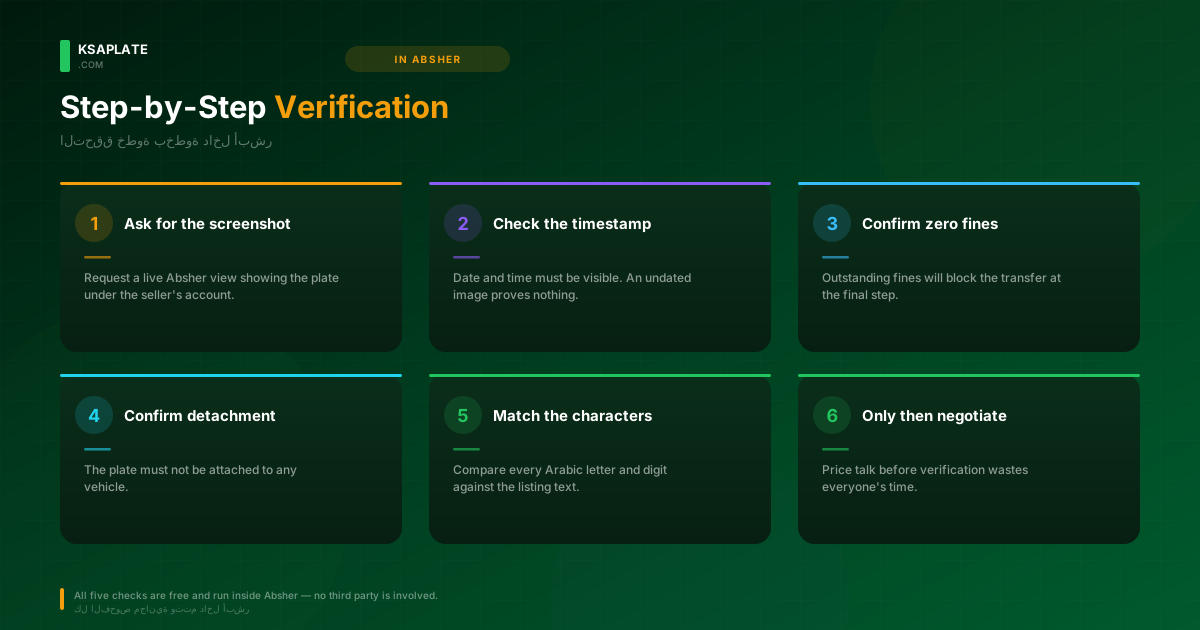
- اطلب الاستمارة. اطلب لقطة شاشة تظهر رقم اللوحة، الحروف واسم البائع.
- تطابق الاسم مع الهوية. تأكد من أن اسم الاستمارة يساوي الشخص على المكالمة أو هويته الوطنية / إقامته.
- تحقق من الغرامات والحالة. يؤكد البائع عدم وجود مخالفات مستحقة وشهادة فحص وتامين ساري.
- اطلب منهم بدء النقل. يمكن للمالك الحقيقي بدء نقل الملكية في أبشر على الفور.
- ادفع بعد بدء النقل. أطلق الأموال فقط بعد بدء النقل؛ استخدم الضمان للمبالغ الكبيرة.
التحقق من الغرامات، الفحص والتأمين
يجب أن تكون ثلاثة سجلات رسمية نظيفة لإكمال النقل. تمنع الغرامات المرورية المستحقة (مخالفات) نقل اللوحة حتى يتم دفعها. يجب أن تكون شهادة فحص المركبة (فحص) سارية. يجب أن يكون التأمين النشط (تأمين) موجودًا. يمكن للبائع عرض الثلاثة في أبشر؛ اطلب منهم تأكيد كل منها قبل أن تتابع. إذا كان البائع يبيع اللوحة فقط (نقلها إلى مركبة أخرى)، تأكد منهم كيف يتم التعامل مع التزامات المركبة المصدر قبل النقل.
لا تنتقل الغرامات غير المدفوعة إليك كمفاجأة — فهي ببساطة توقف الصفقة حتى يقوم البائع بتسويتها. اعتبر أي تردد في تسوية الغرامات علامة تحذير.
الدفع الآمن والضمان
توقيت الدفع هو المكان الذي يخسر فيه المشترون المال. التسلسل الآمن هو: تحقق، وافق، ابدأ النقل، ثم ادفع. للوحة ذات قيمة أعلى، استخدم خدمة ضمان مرخصة (مثل وافي) تحتفظ بالأموال حتى يتم تأكيد نقل أبشر، أو قابل شخصياً في مكتب مرور لإكمال الدفع والنقل في نفس الوقت. يمكن أن يكون إيداع صغير قابل للاسترداد معقولاً للمشترين الجادين، لكن يجب ألا يتم نقل المبلغ الكامل قبل بدء العملية الرسمية. اقرأ الدليل الكامل لشراء للحصول على تدفق الشراء الكامل.
علامات التحذير التي تشير إلى الاحتيال
يشارك البائعون المحتالون أنماطًا يمكن التعرف عليها. أي علامة تحذير واحدة تكفي للابتعاد.
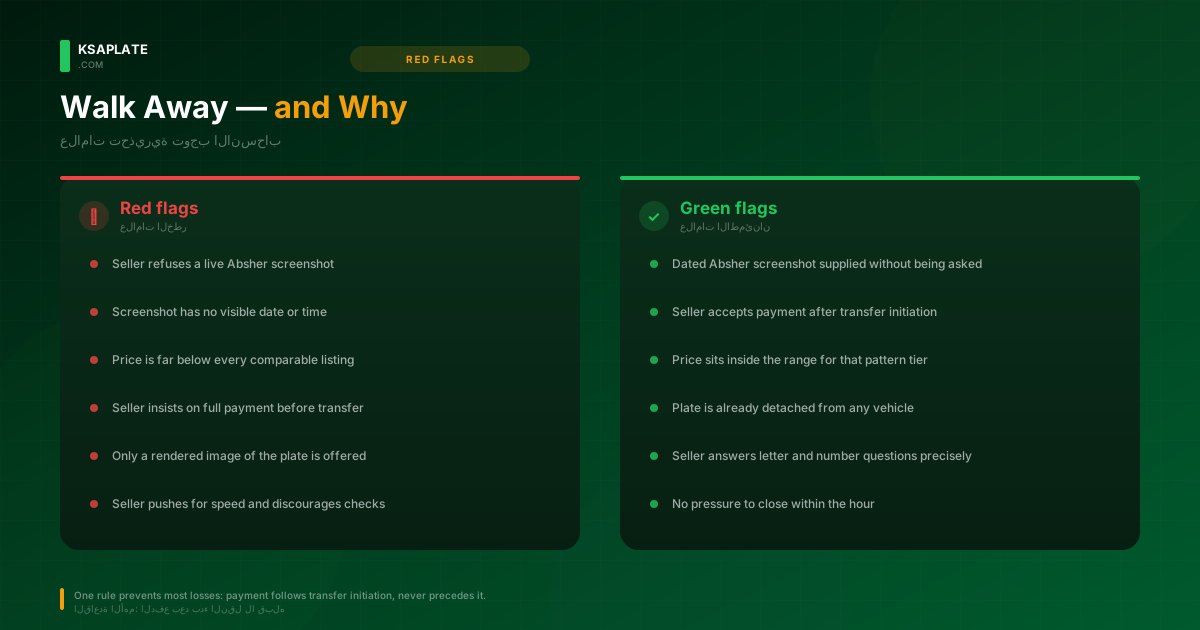
- يرفض إظهار الاستمارة أو إجراء مكالمة فيديو سريعة.
- يطالب بالدفع الكامل عن طريق التحويل البنكي قبل أي خطوة في أبشر.
- الاسم على الاستمارة لا يتطابق مع البائع.
- السعر أقل بكثير من السوق — تحقق من القيمة الحقيقية باستخدام حاسبة قيمة اللوحة.
- ضغط لاتخاذ قرار على الفور أو دفع وديعة لـ "حجز" اللوحة.
طرق التحقق مقارنة
يستخدم المشترون مستويات مختلفة من التحقق اعتمادًا على قيمة اللوحة. إليك كيفية مقارنة الطرق الشائعة.
| الطريقة | ما تؤكده | الجهد | الأفضل لـ |
|---|---|---|---|
| لقطة شاشة الاستمارة | اسم المالك + تطابق اللوحة | منخفض | كل عملية شراء (حد أدنى) |
| مكالمة فيديو مباشرة | البائع يتحكم في الحساب واللوحة | منخفض | الصفقات عن بُعد |
| اختبار بدء النقل | يمكن للبائع نقل الملكية قانونيًا الآن | متوسط | تأكيد الملكية الحقيقية |
| شخصيًا في المرور | الدفع + النقل معًا | مرتفع | اللوحات ذات القيمة العالية |
| ضمان مرخص (وافي) | الأموال محتجزة حتى يتم إتمام النقل | متوسط | مدفوعات كبيرة عن بُعد |
بالنسبة لمعظم اللوحات الخاصة، فإن التحقق من الاستمارة بالإضافة إلى اختبار بدء النقل يكفي. بالنسبة للوحة ذات خمسة أو ستة أرقام، أضف الضمان أو اجتماعًا شخصيًا.
ملاحظات للمغتربين والشركات
يمكن للمقيمين الذين لديهم إقامة سارية وحساب أبشر شراء وتسجيل اللوحات المميزة؛ خطوات التحقق هي نفسها للمواطنين السعوديين. بالنسبة للمركبات المملوكة للشركات، ترتبط اللوحة بالسجل التجاري، ويجب على الممثل المفوض بدء النقل. يجب على المغتربين الذين يخططون لمغادرة المملكة أيضًا قراءة دليل البيع لفهم كيفية نقل أو إدراج لوحة قبل المغادرة.
أسئلة شائعة
كيف يمكنني التحقق من لوحة ترخيص سعودية قبل الشراء؟
كيف يمكنني التحقق من من يملك لوحة ترخيص سعودية؟
هل يمكنني التحقق من غرامات اللوحة قبل الشراء؟
ما الوثائق التي يجب أن يظهرها لي البائع؟
هل من الآمن دفع وديعة قبل النقل؟
كيف يمكنني معرفة ما إذا كان البائع يمتلك اللوحة فعلاً؟
ما هي أكبر علامات التحذير عند شراء لوحة؟
أين يتم إتمام نقل اللوحة فعليًا؟
اشترِ بثقة
تصفح القوائم، تحقق من القيمة الحقيقية لأي لوحة، وتواصل مباشرة مع البائعين — ثم انقل بأمان عبر أبشر.
تصفح اللوحات تحقق من قيمة اللوحةالخاتمة
يحول التحقق عملية شراء محفوفة بالمخاطر إلى عملية آمنة. أكد المالك على الاستمارة، تطابقه مع البائع، تسوية الغرامات، وبدء النقل في أبشر قبل أن تتحرك أي أموال. اتبع هذا الترتيب في كل مرة وستزيل تقريبًا جميع مخاطر شراء لوحة سعودية مميزة — سواء كانت رقمًا رباعيًا بقيمة 1,000 ريال سعودي أو لوحة VIP ذات ستة أرقام.